
Dec 9, 2025
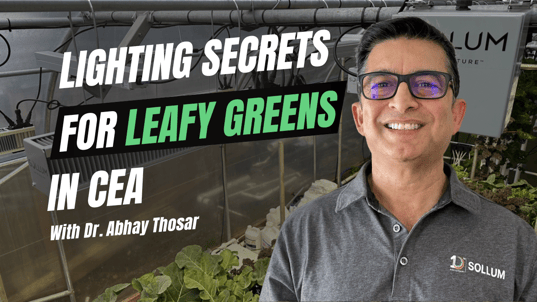
In the rapidly evolving world of Controlled Environment Agriculture, Dynamic LED lighting has emerged as a game-changer for greenhouses and vertical farms, offering unparalleled control over plant growth through customizable spectra, optimized PPFD (Photosynthetic Photon Flux Density), and energy-efficient designs. Moreover, LEDs allow growers to tailor light wavelengths (such as red, blue, and far-red) to specific crop needs, influencing everything from photosynthesis rates and biomass accumulation to flowering cycles and nutrient profiles. This precision not only boosts yields and reduces operational costs but also enables year-round production in urban settings, making vertical farming a sustainable solution to global food challenges.
To demystify these technologies, we've compiled answers to some of the hottest questions on LEDs in vertical farming and greenhouses, with expert insights provided by Abhay Thosar, Chief Horticultural Specialist at Sollum Technologies. Drawing from years of hands-on experience in horticultural innovation, Abhay breaks down complex concepts like spectrum tuning and PPFD measurements, offering practical advice for both novice and seasoned growers looking to maximize their setups. So, let's dive into the hottest questions about LED lighting:

Learn more about Sollum Technologies here
1. How do you adapt lighting strategies for different leafy green varieties like basil, lettuce, or kale?
When it comes to growing leafy greens like basil, lettuce, or kale in a vertical farm, tweaking your LED lighting is like dialing in the perfect recipe for each plant. Basil loves a bit more blue light (10-15%, around 400-500 nm) to stay bushy and boost those aromatic flavors, with a PPFD of 200-300 µmol/m²/s and about 16 hours of light to hit a DLI of 14-17 mol/m²/day. Teen leaf lettuce, on the other hand, is all about fast, lush growth, so you’d go with a full-spectrum LED heavy on red light (70-80%, 600-700 nm) and a gentler PPFD of 250-300 µmol/m²/s, aiming for a DLI of 22-25 mol/m²/day to get the optimum production. However, it would be a completely different strategy for whole head lettuce.. Kale needs sturdy leaves, so adjusting the spectrum as per the growth of the crop and the environmental conditions along with a PPFD does the trick.
As Abhay Thosar puts it, it’s all about knowing what each crop craves. With tunable LEDs, you can shift the light spectrum on the fly, more blue for compact growth, more far red to stretch those leaves, while keeping PPFD even across shelves spaced 25-40 cm apart for good airflow and light coverage. This kind of fine-tuning lets you grow top-notch greens that look and taste amazing, every time.
2. What role does spectrum play in improving uniformity and reducing crop loss?
The light spectrum in LED systems is key to improving crop uniformity and minimizing loss in vertical farming. By tailoring wavelengths, emphasizing blue (400-500 nm) for compact, even growth or red (600-700 nm) and far-red (700-750 nm) for faster leaf expansion, growers can ensure consistent development across plants like lettuce or basil, reducing uneven yields. Abhay notes that precise spectrum control also mitigates stress-related losses by enhancing photosynthesis and nutrient uptake.
3. What are the best lighting tactics to avoid tip burn and maximize shelf-life?
Consistent lighting is the key along with the proper environmental conditions in order to avoid the tip burn. From the lighting stand point it is important not to stress the plants or apply lighting when the environment is conducive to tip burn. For a better shelf life there is research which shows the impact of green light before harvest and how it can improve the shelf life. With static led spectrum it is not possible to apply the green light only treatment.
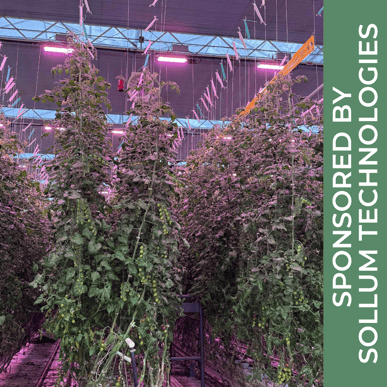 Read more Shedding Light on Tomato Growth: Why Spectrum Matters
4. What is the optimal shelf spacing and PPFD level for leafy greens in vertical farming to achieve consistent, high-quality yields?
For leafy greens like lettuce or kale in vertical farms, space your shelves about 25-40 cm apart to give plants room to grow and breathe while ensuring even light hits every leaf. Aim for a PPFD of 150-350 µmol/m²/s, depending on the types of crops, lettuce likes the lower end, kale can handle more, to get lush, consistent yields without stressing the plants.
5. What is the best recipe for growing leafy greens?
There is no one best recipe in terms of lighting for any crop. The reason being, PAR light drives the photosynthetic activity within the plant however, the plants also depend on temperature, humidity, VPD, CO2, irrigation, fertilizer, air movement, root health and pathogenic pressures to optimize the production or plant response. There can be a base recipe that the growers can start with however, they will have to fine tune the spectrum and intensity based on these other factors and plant response.
6. What intensities of red, green, far-red and blue should be used for enhancing yields?
The intensities of each wavelength is dependent on the cultivar, infrastructure as well as the objectives of the grower. The trick is tweaking these ratios based on your growing conditions, infrastructure as well as your crop and growth stage. For example, bump up blue light slightly for basil to intensify flavor or add a bit more far-red for kale to encourage broader leaves, but always keep PPFD consistent across shelves spaced 25-40 cm apart. By fine-tuning these wavelengths with tunable LEDs, you’re giving plants exactly what they need to thrive, cutting down on stress and pumping up those yields. Just keep an eye on your setup and adjust as you go, happy plants, happy harvests!
7. What are the DLI requirements of the leafy vegetables?
These are just numbers for guide lines which will change based on your infrastructure and other factors to support the lighting. Leafy veggies like lettuce, spinach, and kale generally need a Daily Light Integral (DLI) of 15-25 mols/day in vertical farms.Whole head lettuce does great at 15-18 mols/day, while hardier greens like kale or basil can endure 15-20 mols/day. Hit these with 14-20 hours with the correct ppfd to achieve the total DLI as targeted, and you’ll get lush, high-quality yields!
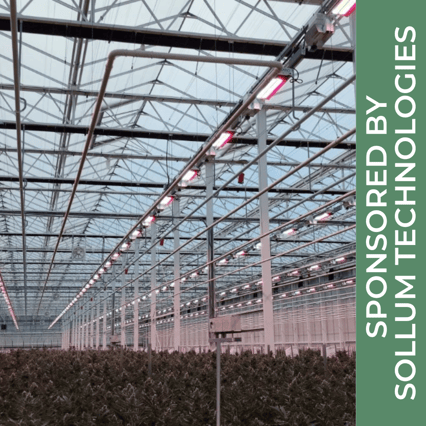
Read more: Greentone’s Transition from HPS to Dynamic LED: A Breakthrough in Cannabis Cultivation with Sollum Technologies
8. What are common pitfalls when switching from fixed-spectrum LEDs to a dynamic approach?
One common mistake is underestimating the learning curve involved in managing tunable LED systems. Fixed-spectrum LEDs are plug-and-play, with set red-blue ratios, but dynamic systems allow real-time adjustments of wavelengths like red (600-700 nm), blue (400-500 nm), green (500-600 nm), or far-red (700-750 nm) to match crop needs. Growers new to this tech often overcomplicate spectrum recipes or make drastic changes without monitoring plant responses, leading to issues like elongated stems from too much red light or stunted growth from excessive blue.
Another frequent misstep is overlooking integration with environmental controls, which dynamic LEDs rely on for maximum impact. Unlike fixed-spectrum setups, where light is a constant and growers adjust temperature (18-24°C) or humidity (60-80%) around it, dynamic systems require synchronized adjustments to avoid plant stress. For example, increasing blue light to boost basil’s flavor compounds demands cooler temps (20-22°C) to prevent heat stress, but growers may miss this, leading to reduced shelf life or nutrient deficiencies.
To sidestep these pitfalls, Sollum Technologies has your back with robust customer training and support to ease the transition to dynamic LED systems, ensuring growers master spectrum tuning and environmental syncing. Our Sun as a Service software takes it a step further, automatically adjusting light spectra, PPFD, and DLI based on real-time crop data, so you can focus on growing top-tier leafy greens without the guesswork.
9. Can Sollum’s lighting help improve color intensity or secondary compound development?
Sollum’s dynamic LED lighting absolutely helps crank up color intensity and secondary compound development in leafy greens and other crops! Our tunable LEDs let you dial in specific wavelengths, like boosting blue light (400-500 nm) to 20-25% for vibrant greens in lettuce or basil, which also ramps up pigments like anthocyanins for richer colors. For secondary compounds, such as flavonoids or antioxidants that boost flavor and nutrition, we can tweak the spectrum, say, adding a touch of far-red (700-750 nm), to trigger stress responses that enhance these compounds without harming growth.
Abhay Thosar, Chief Horticultural Specialist at Sollum Technologies, says our Sun as a Service software makes it a breeze by automatically adjusting spectra based on real-time plant needs, ensuring optimal color and compound development.
10. How can I use Sollum’s zoning capabilities to run staggered harvests in one room?
With Sollum’s zoning capabilities, you can easily run staggered harvests in a single vertical farming room by customizing light recipes for different growth stages within the same space. Our dynamic LED system lets you divide your room into zones, each with tailored spectra, PPFD (150-250 µmol/m²/s), and photoperiods to match crops like lettuce or basil at seedling, vegetative, or finishing phases. For example, one zone might use higher blue light (20%, 400-500 nm) for young plants, while another gets more red (70-80%, 600-700 nm) for mature greens, all managed through our Sun as a Service software for precise control. Abhay says this flexibility, paired with proper shelf spacing (25-40 cm), ensures each zone hits its DLI (12-17 mol/m²/day) without cross-interference, letting you cycle harvests seamlessly and keep fresh greens rolling out non-stop.
Bonus Question. How can I learn more?
To explore advanced LED lighting solutions for vertical farming and greenhouses, visit Sollum Technologies’ website at sollumtechnologies.com. The site offers comprehensive resources, including white papers on optimizing light spectra for crops like leafy greens, detailed case studies showcasing yield and quality improvements, and in-depth information on the SUNaaS® platform, which automates dynamic lighting for precise PPFD and DLI control. Abhay Thosar, Chief Horticultural Specialist, recommends exploring the “Our Solution” section for insights into fixtures like the SF-E2 and contacting our expert team via the site’s form for tailored support to enhance your cultivation success.
Watch more in our latest Webinar
*This article is part of a sponsored content collaboration with Sollum Technologies. The views and information presented were developed in partnership with the sponsor.