
Feb 20, 2026
That's Why We Built This Training
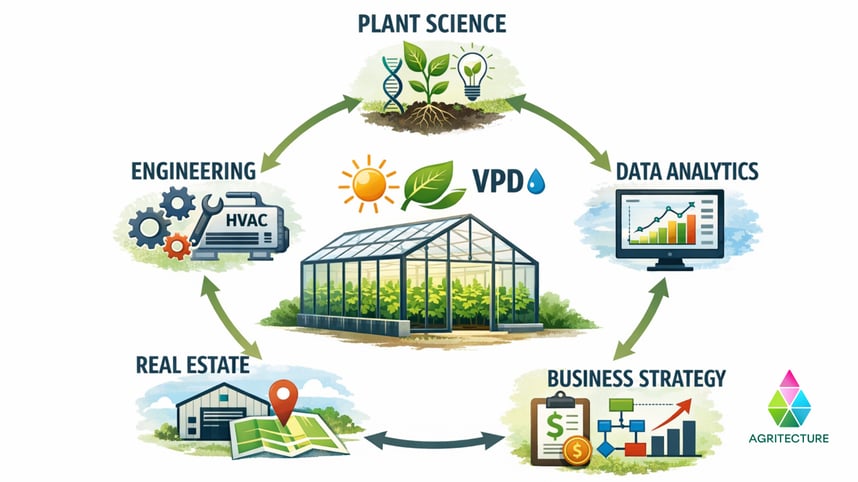
Controlled Environment Agriculture sits at a unique crossroads. It's part plant science, part engineering, part data analytics, part real estate, and part business strategy, all wrapped into one incredibly complex operation. A grower needs to understand photosynthesis and vapor pressure deficit in the morning, then pivot to HVAC system design after lunch, and close the day reviewing cash flow projections and customer acquisition funnels. No other form of agriculture demands this breadth of expertise from a single team.
And yet, most people entering CEA come from just one of these worlds. The engineer doesn't fully grasp nutrient management. The horticulturist struggles with financial modeling. The investor can evaluate a business plan but can't tell if the production assumptions behind it are realistic. These knowledge gaps don't just slow projects down… they kill them.
After supporting over 350 projects across 40+ countries, we've seen this pattern repeat itself more times than we'd like to count. Brilliant ideas, significant capital, genuine passion, derailed by decisions that could have been avoided with the right knowledge at the right time.
Why Cross-Disciplinary Knowledge Matters Now More Than Ever
The CEA industry is maturing. Investors are no longer writing checks based on hype alone, they want to see realistic unit economics, proven operational workflows, and teams that understand both the biology and the business. Growers who can only talk about crop quality but can't articulate their cost-per-head or path to profitability are getting left behind. And investors who don't understand the technical nuances of what they're funding continue to back projects with fundamentally flawed assumptions.
The stakes are real. A single wrong decision on system design can lock a farm into inefficiencies for years. Underestimating energy costs or overestimating yield projections can turn a promising venture into a cash burn. Choosing the wrong market positioning in an increasingly competitive leafy greens landscape can mean the difference between thriving and barely surviving.
Whether you're a grower scaling your operation, an entrepreneur planning your first facility, or an investor evaluating your next deal, understanding the full picture isn't optional anymore. It's the baseline.
Introducing the CEA Leafy Greens Interactive Online Training
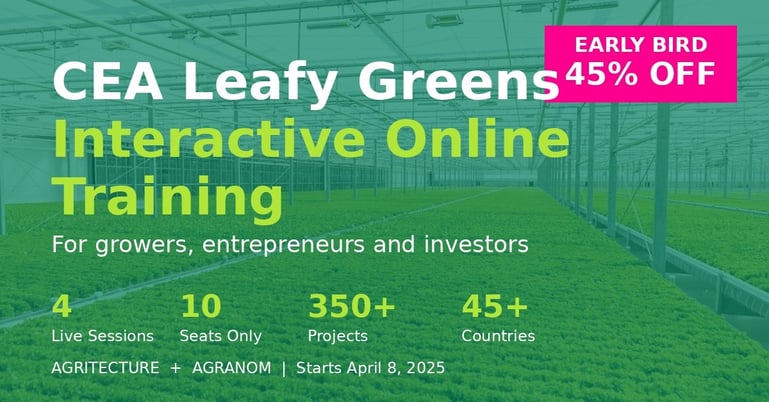
This is exactly why we partnered with Agranom to create the CEA Leafy Greens Interactive Online Training — a hands-on, cohort-based program designed to give participants the comprehensive knowledge they need to make confident decisions in leafy greens CEA.
The training is led by Henry Gordon-Smith, Founder and CEO of Agritecture, and Denis Laci, Founder and Crop Specialist at Agranom. Henry brings over a decade of global consulting experience across 350+ projects and teaches Smart Agriculture for a Changing Climate at Columbia University. Denis comes from a farming family and has spent over five years specializing in indoor CEA, working with industry-leading companies on hydroponic lettuce and herb cultivation, advanced research trials, and high-tech greenhouse optimization. Together, they bridge the gap between strategic thinking and hands-on growing expertise.
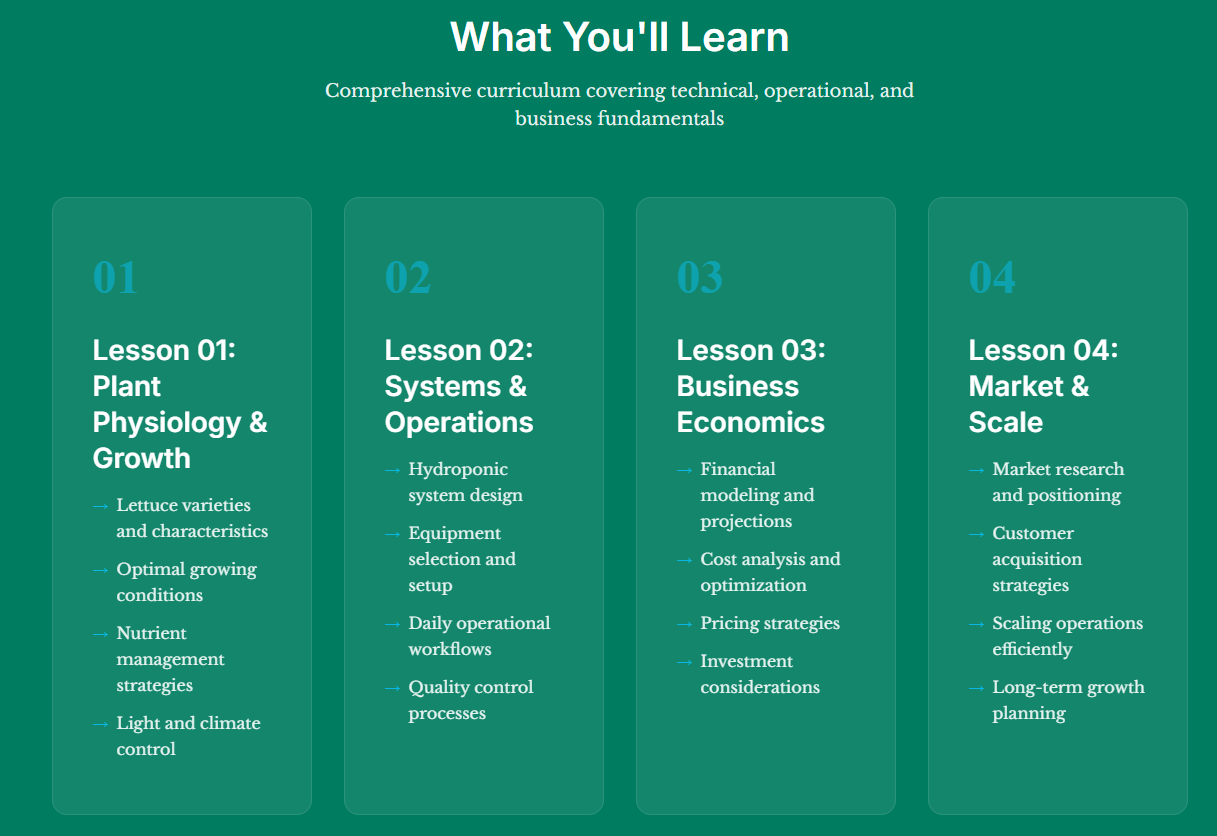
The program is structured around four live, interactive sessions delivered via Zoom, each lasting 2.5 hours with built-in Q&A time:
Participants also receive a twelve-month license to Agritecture Designer, our commercial farm-planning software, so you can model and stress-test your own project using the knowledge gained during the training.
What Makes This Different
This isn't a library of pre-recorded videos you'll never finish. Every session is live. The cohort is limited to a maximum of 10 participants, which means you'll have direct access to the instructors, space to ask questions specific to your project, and the ability to learn from the challenges and perspectives of your peers.
We designed this training to be the program we wish existed when we started advising CEA projects, one that connects the dots between plant science, technology, operations, and economics in a way that's practical, honest, and immediately applicable.
Whether you're planning your first facility, optimizing an existing operation, or evaluating a CEA investment, this training is built to help you move forward with clarity and confidence.