
Jul 6, 2026
How leading projects across Saudi Arabia, the UAE, Qatar, Oman, Bahrain, and Kuwait are integrating productive landscapes, water reuse, and agriculture into resilient masterplans.
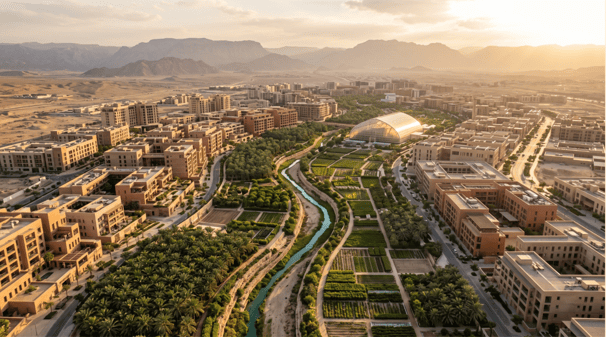
Illustration generated with AI.
by Niko Simos
For decades, "green" in Gulf masterplans meant one thing: irrigated lawns and ornamental palms, sustained by desalinated water at enormous cost. That era is ending. Across the GCC, a new generation of masterplans is treating agriculture, wadis, and recycled water not as afterthoughts but as the organizing logic of entire districts. For developers, planners, and governments, the question is no longer whether to integrate productive landscapes it's how to do it without repeating the region's most expensive mistakes.
We reviewed the strongest publicly documented projects across Saudi Arabia, the UAE, Qatar, Oman, Bahrain, and Kuwait. Three clear models, and one critical methodology lesson, emerged.
Three Models Leading the Region
1. The Productive-Heritage Oasis: AlUla
Saudi Arabia's Journey Through Time Masterplan in AlUla is arguably the most powerful example of agriculture-integrated masterplanning in the GCC today. Led by the Royal Commission for AlUla, with Prior + Partners supporting the masterplan and agricultural strategy, the plan centers on a 20 km heritage corridor and the rejuvenation of a 9 km Cultural Oasis within a roughly 16,000-hectare oasis landscape.
What makes AlUla different is its framing: oasis farming is treated as heritage conservation and landscape stewardship, not just crop production. Date palm orchards, farmer continuity, and ecological restoration are woven into tourism, livelihoods, and low-carbon mobility. Agriculture isn't an amenity here, it's the identity of the place.
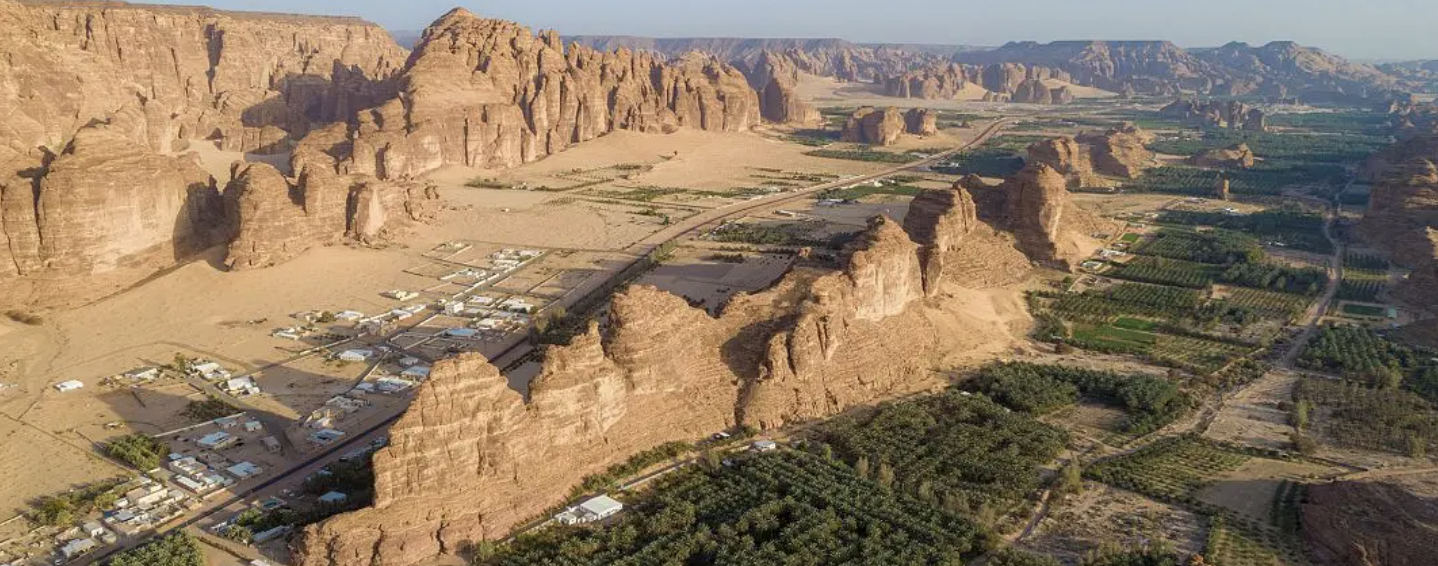
Source: Saudi Press Agency (SPA), AlUla… Land of Civilizations and Largest Open Museum in the World (2022).
2. The Closed-Loop Sustainable Community
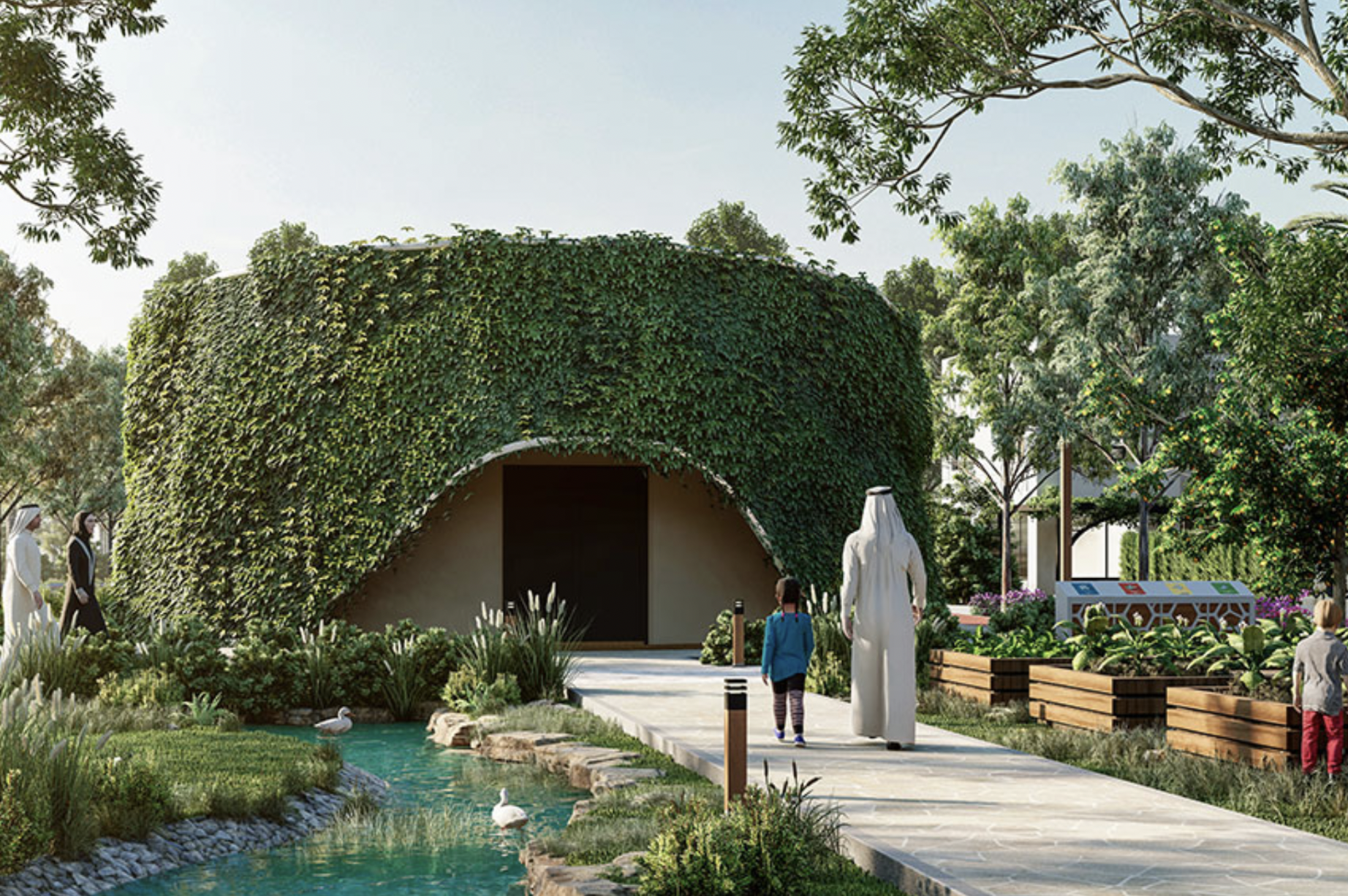
The "Sustainable City" family of projects, Sharjah Sustainable City, The Sustainable City Yas Island in Abu Dhabi, and The Sustainable City Yiti in Oman, treats food production as one gear in a larger machine. Urban farms, biodomes, and vertical farming operate alongside treated wastewater reuse, solar power, and circular waste systems. As AtkinsRéalis documents for Yas Island, on-site food production is part of a net-zero-oriented performance system, not decoration.
Sharjah Sustainable City, launched in 2019 and now essentially delivered, has become the region's operating benchmark, proof that this model works beyond the rendering stage.
3. The Wadi as Urban Infrastructure
The third model may be the most consequential for masterplanning practice. Projects like Expo Valley within Expo City Dubai, Lusail City's Wadi Conservation Park in Qatar, Madinat Al Irfan (masterplanned by Arup), and Sultan Haitham City (designed by SOM, featuring a 7.5 km wadi park) all treat ephemeral drainage lines as public-realm spines, flood pathways, biodiversity corridors, and microclimatic assets, rather than residual land behind a fence.
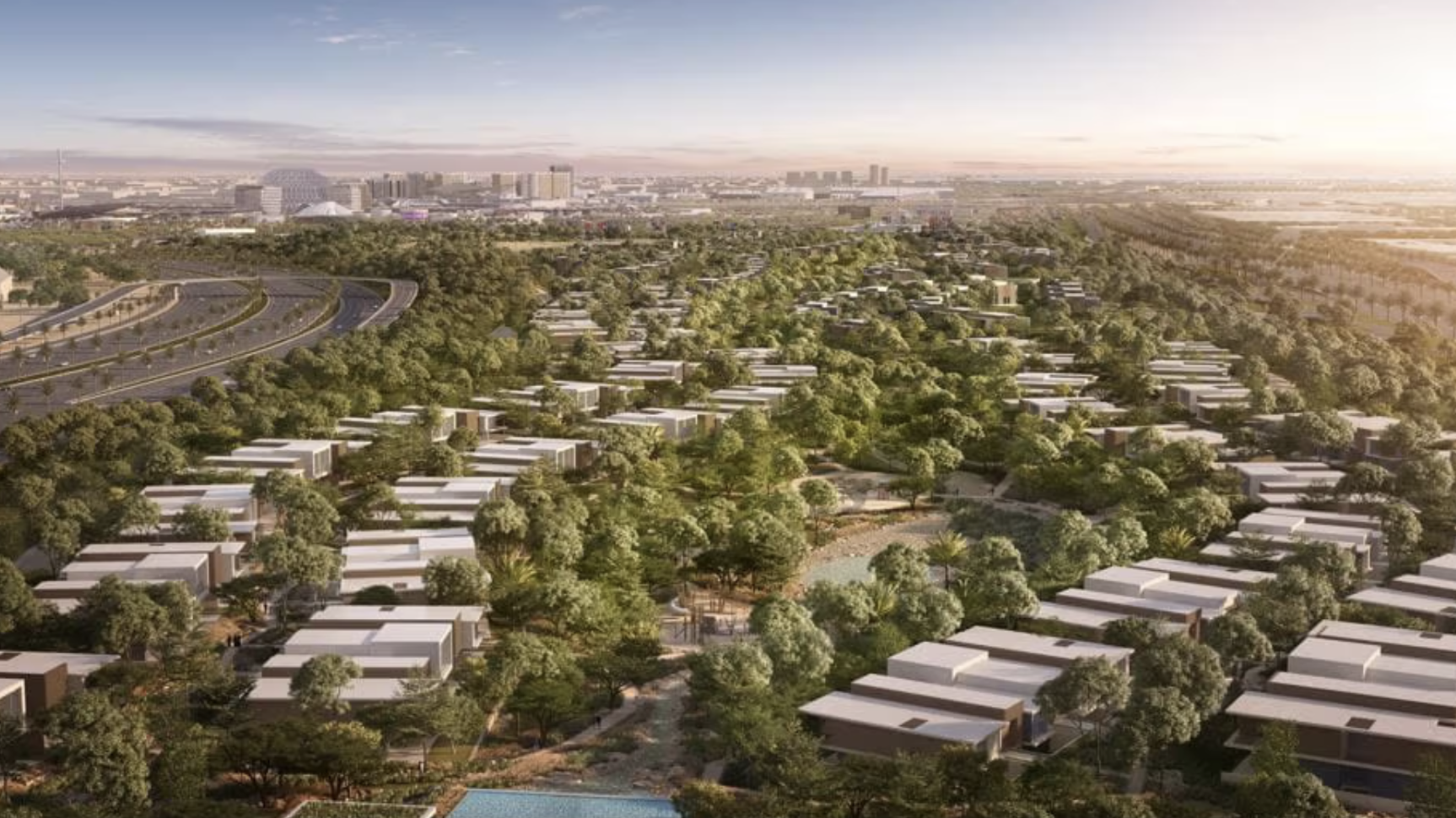
This aligns with recent research on flash flooding in MENA cities, which argues wadis should be planned as multifunctional landscape resources, not hazards to be piped away.
Bahrain and Kuwait are earlier in this journey, but momentum is building: the Hamala Agricultural Oasis (Edamah with Badia Farms) brings explicit hydroponic urban farming to a 5-hectare redevelopment, while Kuwait's South Saad Al-Abdullah City embeds treated-water and drainage infrastructure at new-city scale..png?width=1920&height=300&name=Blog%20CTA%20Banners%20(11).png)
The Trends Behind the Projects
Treated wastewater is the region's landscape workhorse. Across the UAE, Qatar, Bahrain, Oman, and Kuwait, treated sewage effluent (TSE) is the dominant non-potable water source for landscapes. The emerging hierarchy is clear: TSE first, stormwater capture second, groundwater as a constrained backup, and desalinated potable water last. Research on wastewater reuse in arid irrigation supports this, with the caveat that salinity, nutrients, and pathogens must be matched carefully to crop and irrigation method.
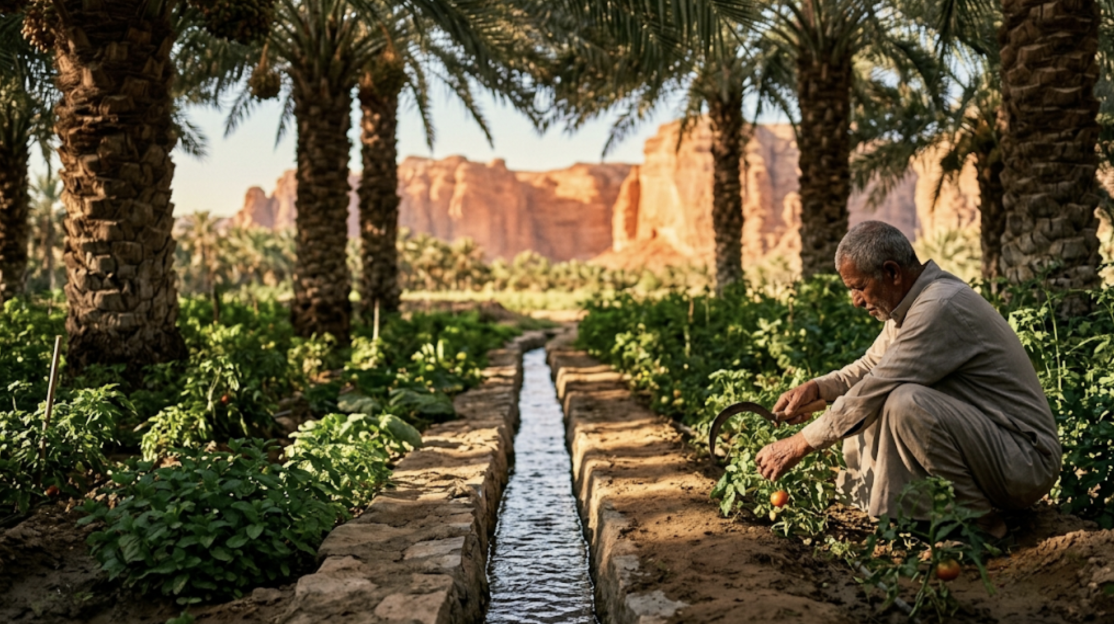
Illustration generated with AI.
Multi-benefit framing wins. The projects with the highest implementation credibility connect farming to at least four functions at once: food or livelihood, heritage, heat mitigation, and water management. Projects that frame productive landscapes as mere "amenities" tend to publish less evidence of actual delivery.
The data gap is operational. Most projects publish compelling visions but little on annual irrigation demand, soil salinity baselines, or O&M governance. That's exactly where deals succeed or fail.
The Agritecture Methodology: Water First, Crops Later
This is where our approach diverges from the typical "add an urban farm" brief. The highest-probability path in GCC masterplanning is to start with the wadi and drainage structure and non-potable water availability, then allocate productive landscapes by water quality, salinity tolerance, microclimate, and management model, and only then finalize land-use commitments.
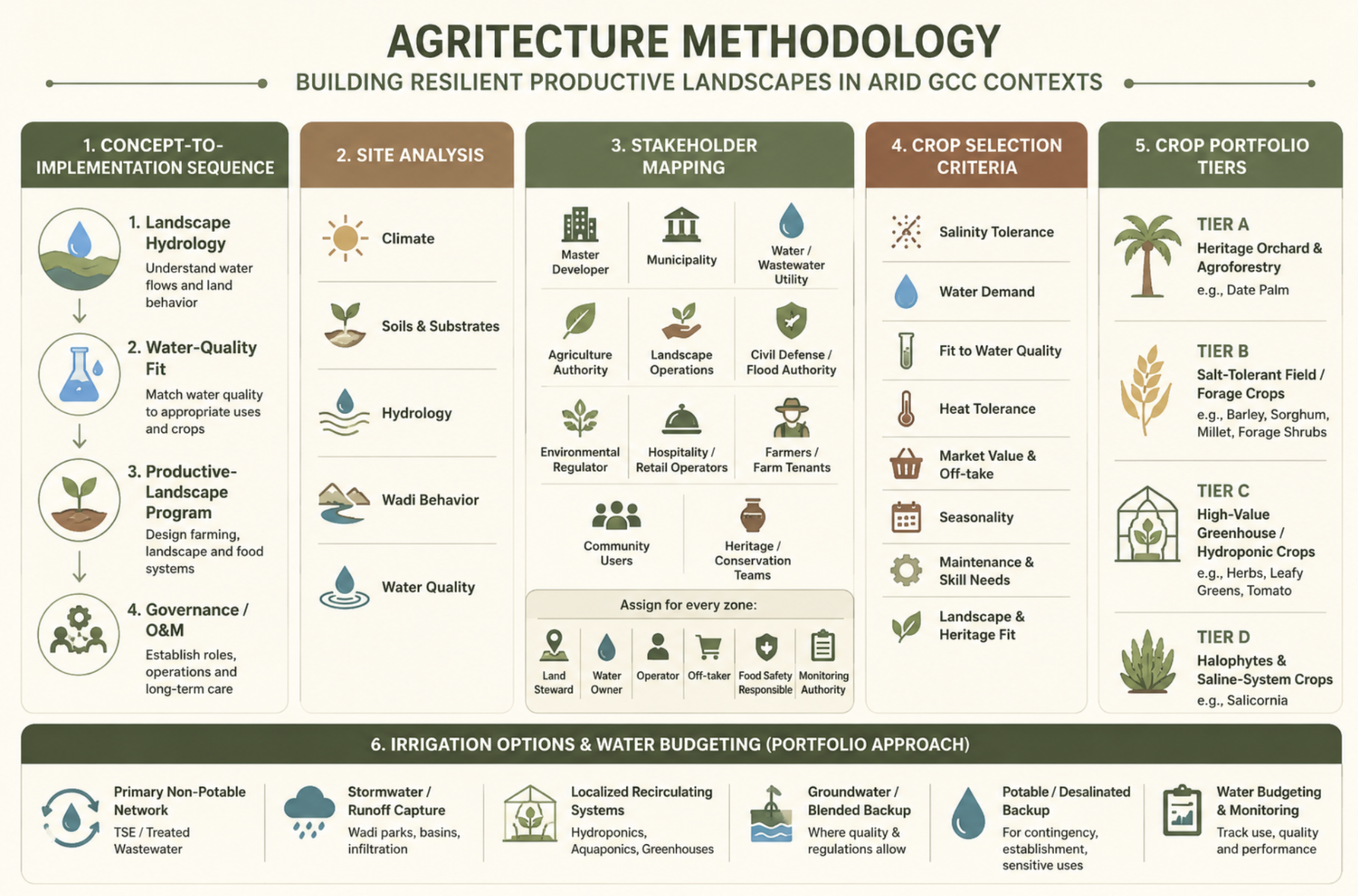
In practice, that means:
- Site analysis before land take: hydrology, soil salinity, wadi behavior, and water quality (TDS, SAR, boron, pathogens) mapped block by block.
- Tiered crop portfolios: heritage crops like date palm; salt-tolerant field crops like barley and quinoa (per FAO salt-tolerance guidance and ICBA's biosaline research); high-value hydroponics; and halophytes for marginal water.
- Pilot-first phasing: three to five typology pilots - an orchard plot, a greenhouse block, a community garden, a wadi-recharge segment - with clear go/no-go tests before district rollout.
- Governance assigned early: for every productive zone, name the land steward, water supplier, operator, off-taker, food-safety party, and monitoring authority. If those six roles aren't assigned, "urban agriculture" stays symbolic.
- Stacked-value business cases: the farm alone may not deliver the highest return, but water security + heat mitigation + placemaking + food production together often do, a logic backed by recent nature-based-solutions valuation work.
The GCC's most credible projects prove that productive landscapes work when water, agronomy, governance, and design are planned together from day one. That integration is exactly what Agritecture does. Whether you're a master developer weighing an urban agriculture program, a government agency shaping a food-security strategy, or a design team that needs the agronomic and water numbers behind the vision, our team has advised on urban agriculture projects worldwide and can help you move from concept to a bankable, operable plan.
BOOK A MASTERPLAN WATER AND AGRONOMY REVIEW.