
Jul 1, 2026
Canada's first food security strategy puts real capital behind greenhouses and vertical farms. Here is what it means before you build, invest, or plan.
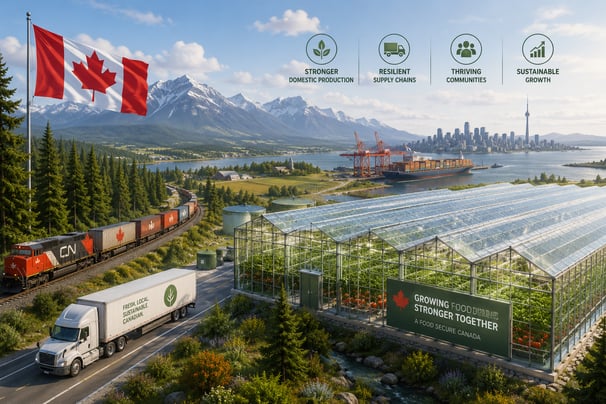
Illustration generated with AI.
On Canada Day 2026, Canada is celebrating more than its history. Three weeks ago, Prime Minister Mark Carney launched the country's first-ever National Food Security Strategy, backed by more than $3 billion in investments over ten years (Office of the Prime Minister, 2026). For the CEA sector, the announcement carries a specific signal: Ottawa has assigned controlled environment agriculture its own dedicated capital envelope and measurable national targets within a national food security framework for the first time. A $750 million allocation backs that commitment.
The Gap Between What Canada Grows and What Canadians Eat
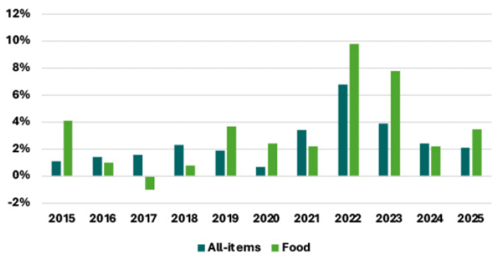
Canada's agri-food and seafood exports reached $100.3 billion in 2024, placing the country among the top ten exporters globally (AAFC, 2024-25 Departmental Results Report). Yet Canada is simultaneously the world's eleventh largest agri-food importer. Canadians source 88% of their fresh fruit and 72% of their vegetables from abroad, with the United States alone supplying roughly 40% of those vegetable imports (AAFC, 2026). Grocery price inflation reached 9.8% in 2022 and 7.8% in 2023, leaving Canada among the highest-cost grocery markets in the G7 (Statistics Canada, via AAFC, 2026).
The core structural problem, as Carney stated at the launch, is that "too much of what we grow is processed elsewhere, and too many Canadians still rely on imported food at higher prices" (Office of the Prime Minister, 2026). Of every dollar Canadians spend on domestically produced food, approximately 23 cents goes to food processors, the largest single share in the supply chain, yet Canada's processing sector is considerably smaller relative to its primary agriculture base than comparable economies like the United States and Germany. Transportation adds another layer: logistics absorbs 7% of Canadian food spending versus 4.6% in the US, a gap that reflects, in part, the vast distances food travels across Canada's geography (AAFC, 2026).
CEA addresses several of these pressure points simultaneously. It extends Canada's effective growing season: where outdoor agriculture is limited to a fraction of the year across most of the country, enclosed vertical farm and greenhouse production significantly extend the growing calendar, reducing structural dependence on imported fresh produce (FCC, 2026). It also compresses the supply chain: production located inside or adjacent to urban centres requires less transportation, less cold storage, and fewer handling steps before reaching a shelf, which bears directly on the logistics cost gap the strategy identifies. For rural and northern communities where conventional supply chains are most strained, CEA systems offer locally controlled production that long-distance logistics cannot reliably replace. And with 40% of Canadian vegetable imports tied to a single trading partner currently operating under significant tariff uncertainty, building domestic CEA capacity is also a trade exposure hedge, a concentration of supply risk that domestic production directly reduces (AAFC, 2026).
What the Strategy Actually Allocates for CEA
The $750 million Controlled Environment Agriculture Growth Pathway distributes its capital over seven years across two streams (AAFC, 2026; The Packer, 2026).
The $650 million CEA Technology Adoption Stream targets robotics, advanced lighting, automation, and digital farm management tools across existing facilities and new builds, with cost reduction in energy and operations as the primary objective.
The $100 million rural and northern stream directs capital toward communities where geography, distance, and infrastructure gaps make standard supply chains unworkable.
Three measurable national targets accompany this investment (AAFC, 2026):
- Double the value of CEA production sold domestically from $774 million in 2024 to $1.55 billion by 2032
- Reduce Canadian dependence on imported crops that can be grown through CEA by 20% by 2032
- Lower labour and energy costs in CEA production by 10 to 20% by 2032
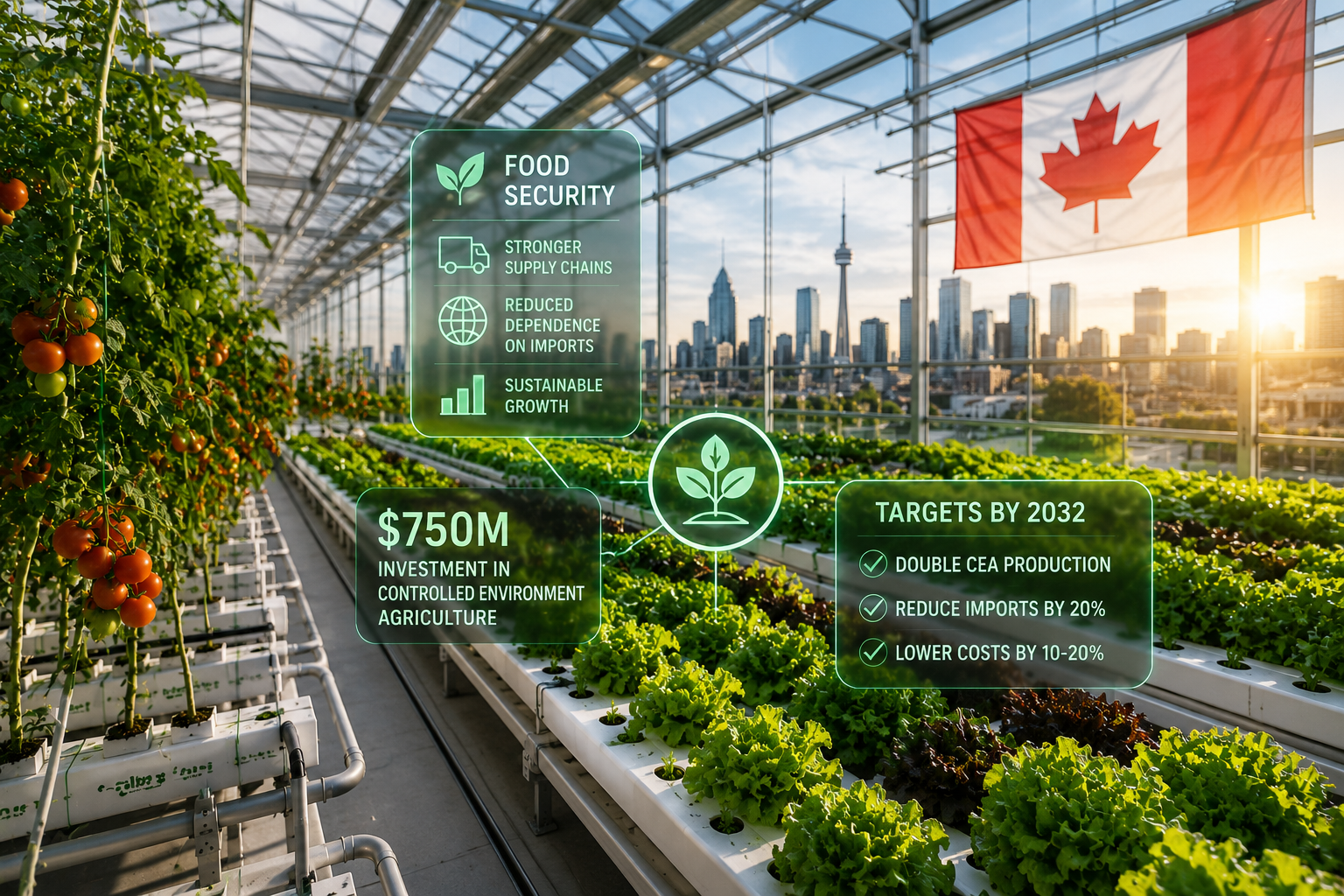
Illustration generated with AI.
Two additional instruments matter for operators and investors. Farm Credit Canada will administer a dedicated $1 billion project financing vehicle for high-potential, capital-intensive agri-food ventures, structured to move capital into projects that require more patient or flexible financing than conventional lenders typically provide (AAFC, 2026). The Strategic Response Fund opened its first competitive proposal round in June 2026, with contributions up to $50 million per project and a second intake scheduled for fall 2026. On the tax side, commercial greenhouse operators can now write off qualifying construction costs in the year of acquisition rather than depreciating them over time, provided at least 90% of the building's floor space is dedicated to production (SEF, 2026; AAFC, 2026). The FCC fund and CEA Growth Pathway application processes have not yet been fully published. The feasibility work done now is what positions a project to move when those calls open.
What This Means for Operators and Entrepreneurs
Canada already has a commercially significant and established CEA sector. As of 2024, 974 commercial greenhouse vegetable operations were producing 866,484 metric tons of vegetables and generating $2.7 billion in sales (AAFC, 2026). What the strategy addresses are the specific barriers that have held the sector back from capturing more of the domestic market: high energy costs, labour intensity, and limited capital access for mid-scale operators trying to grow beyond early-stage facilities.
The Technology Adoption Stream is the most directly relevant mechanism for existing operators. Automation to reduce labour dependency and efficiency upgrades to lower energy intensity are exactly the cost lines that determine whether a facility's operating economics justify expansion. For those planning new builds, the immediate expensing provision and the prospect of technology adoption grants change the capital recovery profile, particularly for projects that are already fundamentally sound but were previously deterred by upfront capital requirements.
The sector has already demonstrated it can scale when operators find the right conditions. Greenhouse strawberry output nearly tripled between 2020 and 2024, from 2.5 million kilograms to over 7.5 million kilograms worth $75.2 million, driven by operators who identified an import-dependent crop and built toward it (AAFC, 2026). GoodLeaf Farms grew from a single Guelph facility to three commercial-scale vertical farms across Guelph, Calgary, and Montreal, raising approximately $130 million in private financing between 2023 and 2025 (GoodLeaf Farms, 2025; SustainableBiz Canada, 2025). Both scaled without a dedicated federal CEA capital program. The Technology Adoption Stream and immediate greenhouse expensing now add a layer that private capital alone could not provide: reduced upfront costs and technology grants that change the feasibility calculation for operators who were previously on the margin.
Still, federal support changes the capital cost and recovery profile but does not override the fundamentals. Crop selection, market access, energy rates, and labour model still determine whether a project is viable, the same variables that drove the strawberry expansion and GoodLeaf's site selection decisions before any federal program existed. The funding environment is a variable within that analysis, not a replacement for it.

What This Means for Investors
Three elements of the federal framework have materially strengthened the investment case for Canadian CEA.
The first is the tax treatment of new greenhouse construction. Immediate expensing reduces upfront capital outlay for qualifying builds, improving the economics of new facilities and expansions (BDO Canada; AAFC, 2026). Capital recovery timelines on new builds have improved, though overall project competitiveness still depends on energy costs, crop selection, and market access, not on tax treatment alone.
The second is the $1 billion FCC Project Finance Fund, administered as dedicated financing for capital-intensive agri-food projects structured to reach operators at a scale and on terms that conventional lenders have not consistently served (AAFC, 2026). This is project financing, not grant capital, and comes with repayment obligations, but it represents a federal commitment to making structured project debt available to the sector at scale.
The third is the measurable national targets. Doubling domestic CEA sales and reducing import dependence by 20% by 2032 are strong signals for long-term investors. Governments that attach named performance indicators to capital commitments are harder to walk back from than those that publish aspirational frameworks. That does not make the targets contractual, but it changes the durability of the investment thesis when underwriting multi-year capital cycles.
Energy consumption remains one of the dominant cost and carbon variables in CEA, particularly for vertical farms, and the strategy does not resolve it. The projects most likely to perform are those whose core economics, site, crop, energy source, and market, hold up independently of federal support. What the funding does is accelerate those projects and make upgrades to existing facilities more financially accessible. It does not rescue projects whose fundamentals were weak before the announcement. Richard Lee, executive director of the Ontario Greenhouse Vegetable Growers, noted in response to the strategy that realising its potential will require sustained attention to power costs, physical infrastructure, and workforce supply (The Packer, 2026).
.png?width=1920&height=300&name=Blog%20CTA%20Banners%20(5).png)
What This Means for Canadian Cities
Federal funding in this strategy flows to operators and businesses, not to municipalities directly. But cities determine where operators build. Zoning frameworks, land access, energy infrastructure, and the presence or absence of a local food system strategy all factor into site selection decisions that private operators and their investors make.
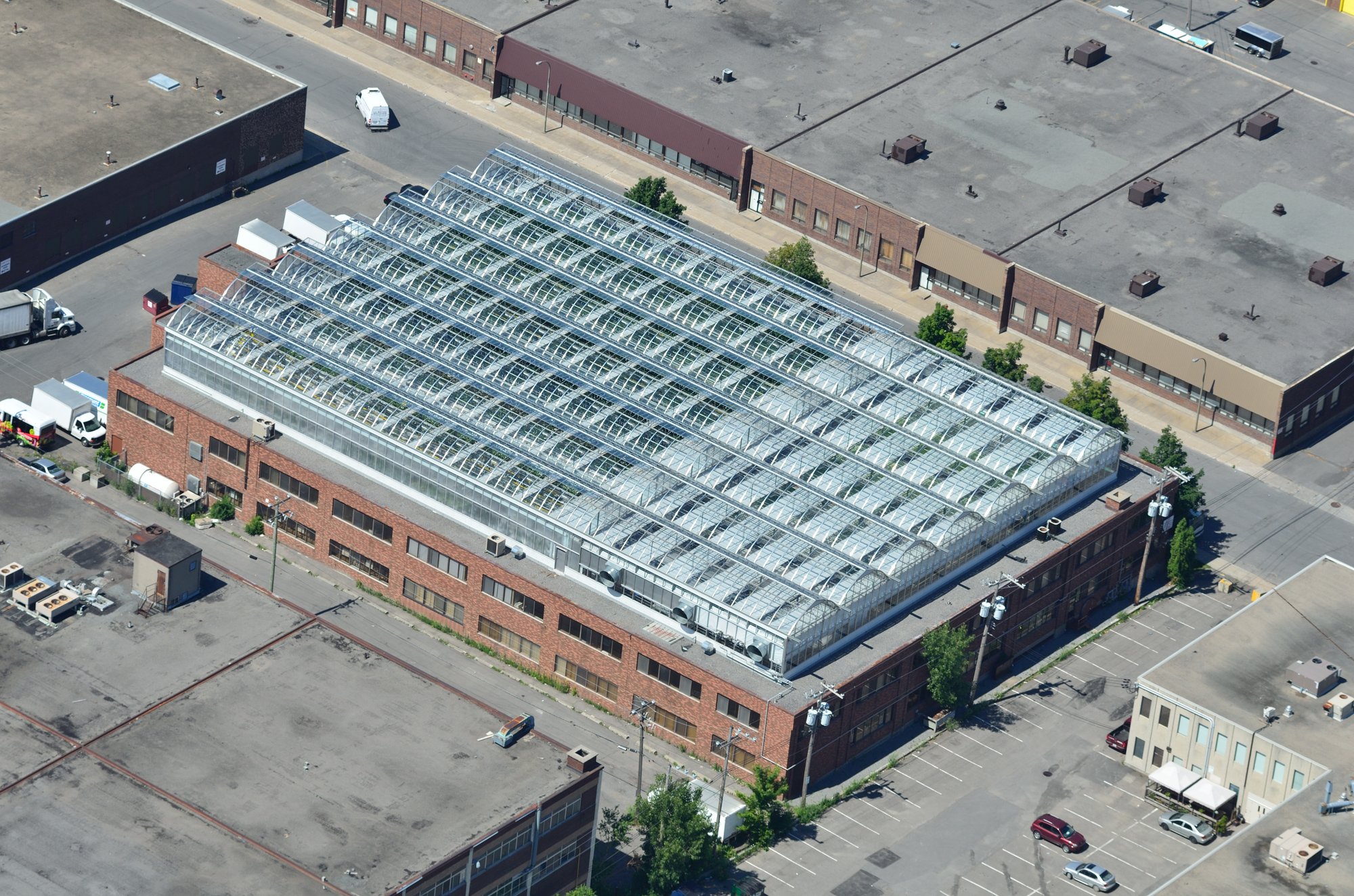
The strategy is direct about one constraint cities control: it explicitly identifies regulatory complexity at the municipal and provincial level as a barrier that raises costs and suppresses investment (AAFC, 2026). Montreal's indoor farming ecosystem is an instructive example of what Canada's urban CEA integration produces over time. Lufa Farms operates five rooftop greenhouses and one indoor farm across the Montreal area, a network the strategy cites as a national model, supplying tens of thousands of households weekly with products sourced overwhelmingly from Canadian suppliers (AAFC, 2026). That ecosystem was built by operators making location decisions in a city whose environment made it possible. The federal strategy creates the capital. It does not choose the cities where it lands.

Countries that have moved furthest on food resilience have clustered CEA infrastructure geographically, connecting production, processing, logistics, and public procurement within regional food systems. Canada now has the federal framework. Which cities build the local strategy to match it is an open question, and an urgent one given that the first funding calls are already open.
For Canadian municipalities working through that question, Agritecture's local food system planning services provide the scenario analysis and strategic framework that connects federal intent to local implementation, including a Smart City project in Toronto that designed 11 urban agriculture solutions and proposed planning strategies for integration into the city's built environment.
.png?width=1920&height=300&name=Blog%20CTA%20Banners%20(11).png)