
Jul 20, 2026
On-site food production is becoming a standard feature of green hotel certification, not just a guest-facing design trend, and it's showing up behind the bar as fast as it's showing up in sustainability reports.
Source: Image courtesy of Raiz
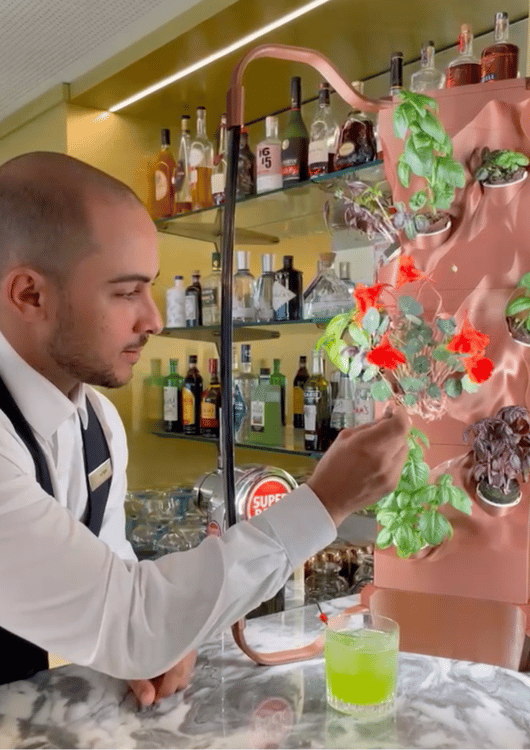
It's 5pm happy hour, and a hotel bar in Porto is currently pouring cocktails garnished with herbs that were growing three feet away an hour earlier. Guests socialize, enjoying their fresh-flavored drinks and the green sustainability-by-design hotel atmosphere around them. The unit growing the herbs behind that bar, called Ortus, is built by Raiz, a Portuguese agritech company that started as a commercial farm planned on Agritecture Designer (Agritecture's own CEA farm planning software and the world's first commercial farm-planning platform built for the industry.)
Local food production is becoming a hospitality expectation, not a novelty
Ortus is a compact turnkey hydroponic growing system consisting of 11 plant spaces, LED lights and automated irrigation with a refillable water reservoir. The product turns unused spaces in hotels, such as kitchens or lounges, into productive, guest-facing features.
Raiz launched Ortus in May 2026 at the Boeira Garden Hotel Porto Gaia, a Curio Collection by Hilton property. The unit is designed around a hospitality team's actual rhythm, letting bartenders and chefs schedule harvests to match menu and service rather than working around a delivery truck. Raiz's move from farm to hotel-embedded product lands inside a trend Agritecture has tracked across hospitality for several years: on-site food production is shifting from a design flourish to something guests, and finance teams, actively expect. Several forces are driving it at once.
This isn't happening in isolation from the broader green hotel movement. Certification programs like Green Key, LEED, and EarthCheck already score properties on local sourcing and reduced food miles as part of their environmental criteria, and a growing number of hotels are treating on-site production as a direct way to earn those points rather than just a nice-to-have. Supply chains for fresh herbs, greens, and specialty produce have become measurably less reliable, whether from climate-driven crop failures, shipping disruptions, or the kind of trade friction that can add days to a delivery window overnight. A growing system installed on-site removes that dependency for whatever crops it covers and assists in the farm-to-table movement. Rising global food prices compound the problem: input costs for imported herbs and out-of-season produce have climbed enough that a kitchen or bar program growing even a portion of its own ingredients gets a real hedge against a volatile cost line, not just a sustainability talking point.
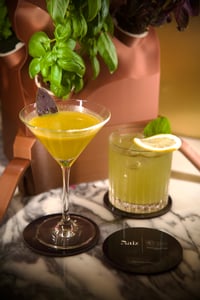
Quality is the next driver, and it's the one guests actually taste. A herb harvested minutes before use behaves differently in a kitchen and on a palate than one that has spent days in a cold chain, and that difference is exactly the kind of thing a five-star property can charge for. There's a further version of this that matters specifically to hospitality brands with properties across different climates. Full environmental control makes it possible to plan for a specific crop's flavor and aroma profile regardless of where it's grown. A Genovese basil, grown to the conditions that give it its characteristic sweetness and aromatic oil profile in Liguria, can be planned for the same result indoors in Dubai or Singapore, not a generic substitute chosen because it was locally available. For a multinational hotel or restaurant brand, that is a way to keep a menu's culinary identity consistent across a portfolio without a single shipment crossing a border. Layer guest experience on top of that: watching a bartender or chef harvest an ingredient in front of you is a form of hospitality theater a supply chain slide deck cannot replicate, and it edges naturally into agritourism, where growing food on-site stops being a back-of-house detail and becomes part of what a guest is there to experience in the first place.
A modular growing unit installed in a lobby, kitchen, or bar also adds to the guest experience and answers the "see it, taste it, believe it" version of that pitch in a way a sourcing certificate never will. The Ortus unit is pesticide-free, using less water than conventional growing, and producing zero food miles between farm and glass. The Boeira Garden bar team has described the fresh herbs as a genuine shift in how they build cocktails, and the hotel frames it simply: guests know exactly where the garnish in their glass came from, because it grew there that morning.
Nutrition and shelf life compound the case together, and basil is a demanding case study. Fresh-cut basil typically stays marketable for only 6.8 to 7.3 days at room temperature, and because basil is unusually sensitive to cold, refrigerating it the way most produce ships can backfire, cutting its usable life to as little as 1.6 days at near-freezing temperatures. The aroma compounds that give basil its flavor decline just as fast, with volatile aroma levels dropping sharply within three days of chilled storage, often before a shipped herb would even reach a hotel kitchen. That combination of speed and fragility matters also because of food waste, which is not only a waste of money but also contributes to a hotel's carbon emissions footprint. Food waste specifically has become its own line item in green hotel scoring: several certification and award programs now weigh it directly, which means a bar or kitchen cutting spoilage isn't just saving money; it's building a case for its sustainability credentials at the same time. On-site farmed herbs skip nearly the entire window where volume gets lost, which means the same basil can end up fresher, more aromatic, and less likely to be wasted than the version that spent days moving through a cold chain to get there.
This fits inside a broader shift in hospitality design, where developers and architects increasingly treat food production as a building system to plan for at the outset rather than a feature to retrofit later.
Beyond the bar: why hospitality properties should think in systems, not a single unit
Ortus makes the case for a compact vertical farm handling herbs at bar or kitchen scale. But a hotel with a real food and beverage program is rarely trying to solve for herbs alone, and different crops perform better in different systems, so the growing system needs to match the property's goals, climate, and operational model.
Open-field agriculture, greenhouses, and vertical farms each solve a different problem, and picking the wrong one can turn an attractive sustainability initiative into an expensive operational burden.
Open-field farming is often the lowest-cost option for hotels with abundant land, particularly resorts and rural properties. It can produce a wide range of crops at relatively low operating costs while offering an authentic farm-to-table experience that guests can walk through and participate in. But production stays highly dependent on local climate, seasonal variability, pests, and extreme weather, and that unpredictability often gets in the way of the consistency hotel kitchens actually need.
Greenhouses offer a middle ground between traditional agriculture and fully controlled environments. They range from low-tech structures that rely mainly on natural sunlight to fully automated, high-tech systems with supplemental lighting and climate control, and by protecting crops from rain, wind, and many pests, they typically deliver higher yields and more consistency than open-field farming, generally at a lower energy cost than vertical farms, especially at the lower end of that tech range. They can also handle a much broader crop portfolio than what's practical to grow indoors, and they typically allow for closer guest visits than the more restricted access common in vertical farms. Some of the tradeoffs include footprint, capital cost, and a degree of climate exposure: greenhouses need available land, which can make them a harder fit for a dense urban hotel, high-tech systems require significant upfront investment, and because they aren't fully sealed, they stay more exposed to outdoor temperature swings and some pest risk than a vertical farm's controlled environment.
Vertical farms excel where space is limited or where production needs to be located directly within the guest experience. Compact systems installed in a building can produce leafy greens, herbs, strawberries, tomatoes, edible flowers, and other high-value crops well. Because the growing environment is fully enclosed, vertical farms can produce year-round regardless of outdoor climate or season, with no weather risk and minimal pest pressure. Quality stays consistent, water usage can often be minimized, and pesticide use is little to none. The trade-off is that artificial lighting and climate control make vertical farms significantly more energy-intensive than greenhouses, and they are generally best suited for high-value crops rather than large-volume produce.
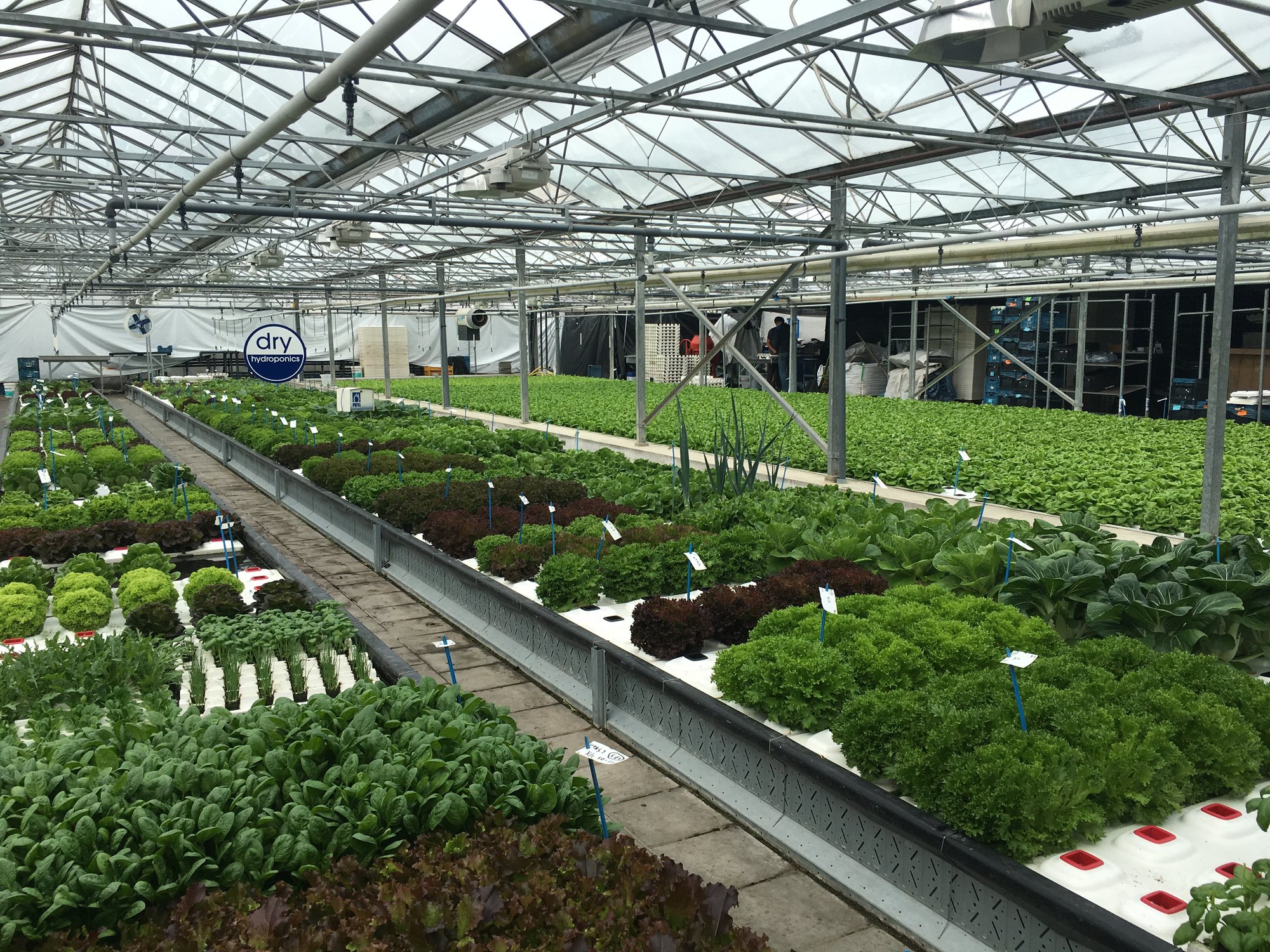
These systems don't have to compete with each other, and many hospitality developments can benefit from combining them. A greenhouse can economically supply fruiting crops and larger quantities of produce, while a smaller vertical farm provides premium herbs, garnishes, and guest-facing experiences inside the building. Matching each crop to the production system where it performs best often delivers stronger economics, greater operational resilience, and a more compelling guest experience than relying on a single technology alone.
Either way, whether a property chooses an open-field farm, a greenhouse, a vertical farm, or some co-location of these systems, the benefits of local production mentioned above hold. Extending that consistency across more crops and at a larger scale builds real resiliency and quality into a hotel's food program, not just a single herb behind the bar.
From Working Farm to Hotel Feature
Raiz founder Emiliano Gutierrez used Agritecture Designer to plan the company's original Lisbon vertical farm, which opened in 2022, growing herbs and higher-value crops like amaranth for restaurants and direct-to-consumer subscriptions. In a 2023 interview with Agritecture, he credited Agritecture Designer's modeling tools, alongside a vertical farming course he had taken beforehand, with giving his team real preparation going into the design phase, saying that groundwork shaped how the team understood the way each decision moved the farm's economics. He also pointed to the Partner Network as a way to avoid the wasted time that otherwise costs a young company real money.
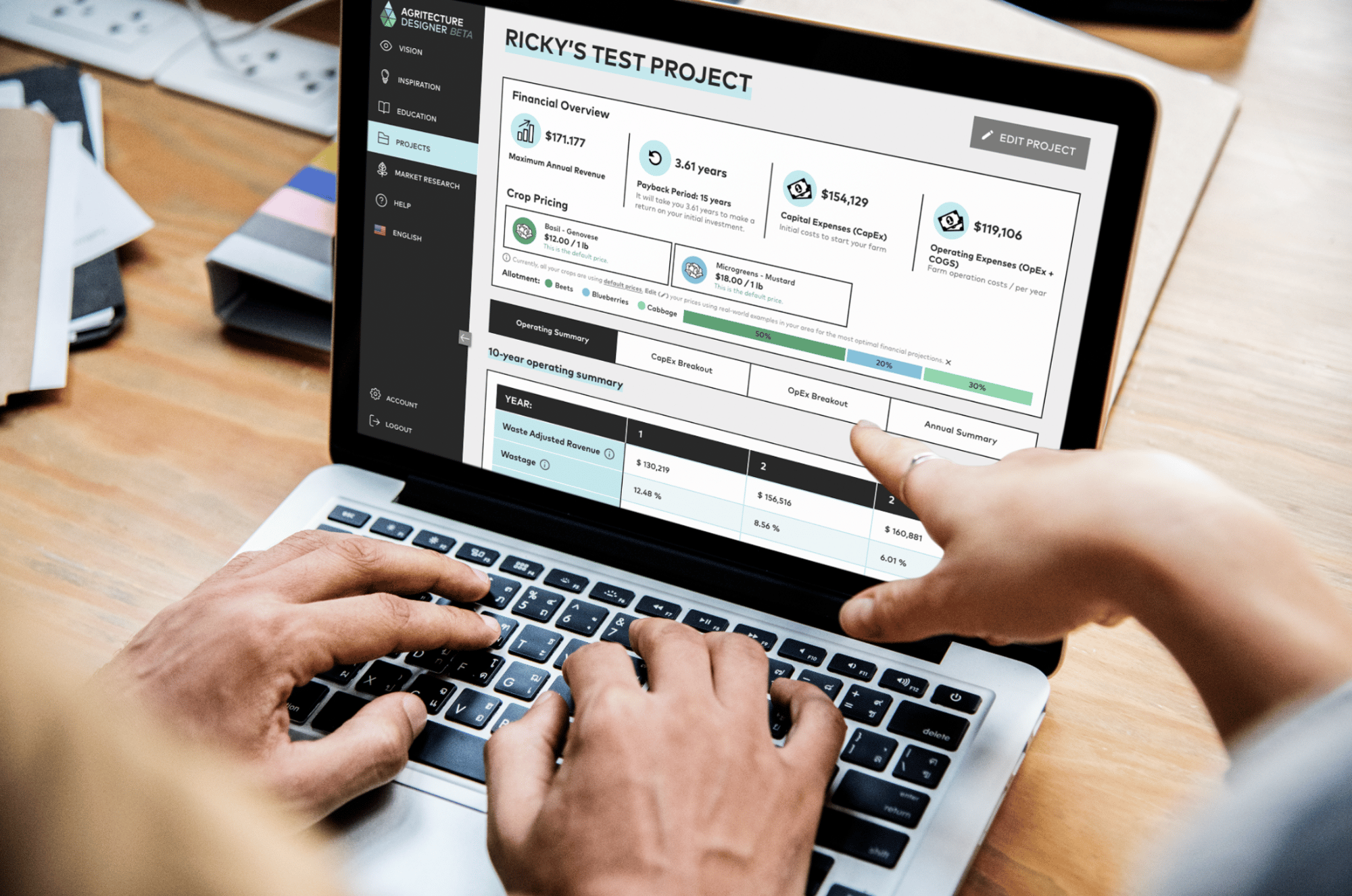
That same process, running the numbers before money gets spent, is what Agritecture Designer is built for more broadly: testing crop choice, system type, and growing area against real cost and yield data before a single wall goes up. For newcomers who don't yet have a CEA background, the software also includes courses that give a comprehensive overview of what to know before you grow.
This is the part worth underlining for anyone evaluating a similar system for a project: the reason Ortus can make a promise credibly is that Raiz already knows, from a working commercial farm, what a growing system's real constraints look like under service pressure. A modular appliance that looks elegant in a rendering but hasn't been built by a team that has actually run a farm, hired growers, and hit a financing wall is a different kind of risk. Raiz's route from Lisbon farm to hotel product is an example of a company earning credibility the hard way before selling the shrunk-down version of it.
Beyond Agritecture Designer
For hotels exploring on-site food production, Agritecture Designer can build a farm model and help with the economics. However, there are a few questions that should come before that: Could you sell extra production locally? Is there a market? What crops should you grow? Where does the farm integrate within the architecture? What does the operational footprint actually look like?
These questions are exactly what a feasibility study is built to answer before a developer or hotel group commits to an on-site growing feature. Skipping that step is why so many hospitality "living wall" installations end up decorative rather than functional. A feasibility study built around this turns a design team's assumption into a number a hotel group's finance committee can actually approve.
Where this goes next
Ortus is one unit in one hotel today. The more interesting question for developers, architects, and hotel groups is whether on-site growing becomes a standard specification line for new luxury properties the way a wine program or a spa already is.
If you're evaluating on-site food production for a hospitality project, whether that's a single bar-mounted unit or a larger farm-to-table concept, the planning stage is what determines whether it becomes a guest experience asset or an expensive plant stand.
.png?width=1920&height=300&name=Blog%20CTA%20Banners%20(1).png)