
Jul 16, 2026
Lighting decisions shape your yield, your energy cost per kilogram, and whether your numbers hold up in front of investors.
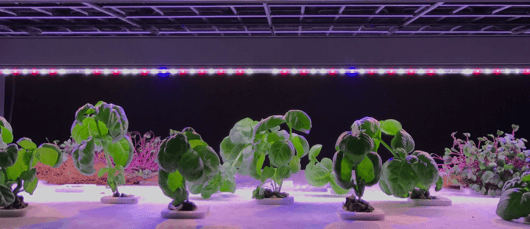
Source: Image courtesy of Sky Vegetables
By Victoria Brian de Moura and David Ceaser
Lighting is one of the most consequential decisions in any greenhouse facility, and also one of the most frequently misunderstood. Most of the conversation in the industry centers on fixture brands, spectrum claims, and PPFD numbers. But the metric that actually ties all of those decisions together, and determines whether your lighting investment pays off, is DLI: Daily Light Integral.
Get it right, and your crops hit target weight on schedule, your energy cost per kilogram stays in range, and your feasibility model holds up to scrutiny. Get it wrong, and none of the other variables save you. Below, we explore what happens to your business when DLI assumptions are wrong, and why it matters more than most growers, developers, and investors currently treat it. To learn the basics of what DLI is, and to calculate how much supplemental light you need and what it will cost month by month, check out our DLI Calculator and Grower's Guide.
What DLI Controls for Your Crop
DLI measures the total amount of photosynthetically active light a plant receives over a full day. It is determined by two variables you control directly:
- the intensity of your fixtures (PPFD) and
- how long the lights are on (photoperiod).
The formula is straightforward: DLI = PPFD × hours/day × 0.0036.
What makes DLI consequential is not the formula, is what the number controls downstream.
Yield and crop cycle speed are directly tied to DLI. Crops grown at the right DLI reach harvest weight faster, which means more turns per year. Turns per year is the single largest driver of annual revenue per square foot in any CEA facility.
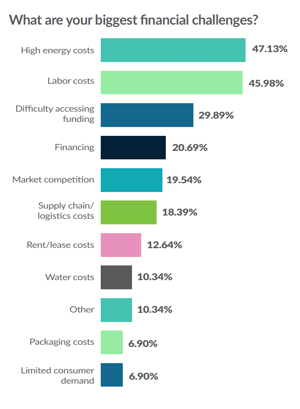
Energy cost per kilogram is a direct function of how much light you are delivering relative to what the crop actually needs. According to the 2025 Global CEA Census, high energy costs are the number one financial challenge reported by indoor farms, cited by around 47% of respondents. Lighting accounts for a significant portion of that, and over- or under-delivering DLI compounds the problem in both directions. Over-delivering is direct, measurable waste. Under-delivering means slow growth and crops that fail to meet quality specs, which costs you on the revenue side instead.
Crop quality and shelf life depend on adequate DLI driving cell wall density, sugar content, and coloration, the visible quality markers that affect price at the point of sale. Under-lit crops are often watery, pale, and prone to early wilting, creating problems with buyers and retailers downstream.
Facility design and capex are also determined by DLI targets. Fixture selection, spacing, and power infrastructure are all set during the design phase based on your DLI requirements. Design to the wrong target and you create fixed costs that are expensive to correct post-construction.
Where DLI Mistakes Actually Happen
In our experience across 350+ CEA projects, DLI errors tend to cluster in a few predictable places.
The first is using the wrong DLI target for the crop. Target ranges vary more than most people expect. Spinach performs in the 12–18 mol/m²/day range, but too high a DLI in a warm environment accelerates bolting. Lettuce sits in a similar range, but sensitive varieties like butterhead can tip burn above 20. Tomatoes need 20–30 mol/m²/day, and failing to hit that consistently is one of the leading causes of low yields in greenhouse tomato operations. Using a single generic "leafy greens" DLI assumption across a mixed crop portfolio is a common and avoidable error.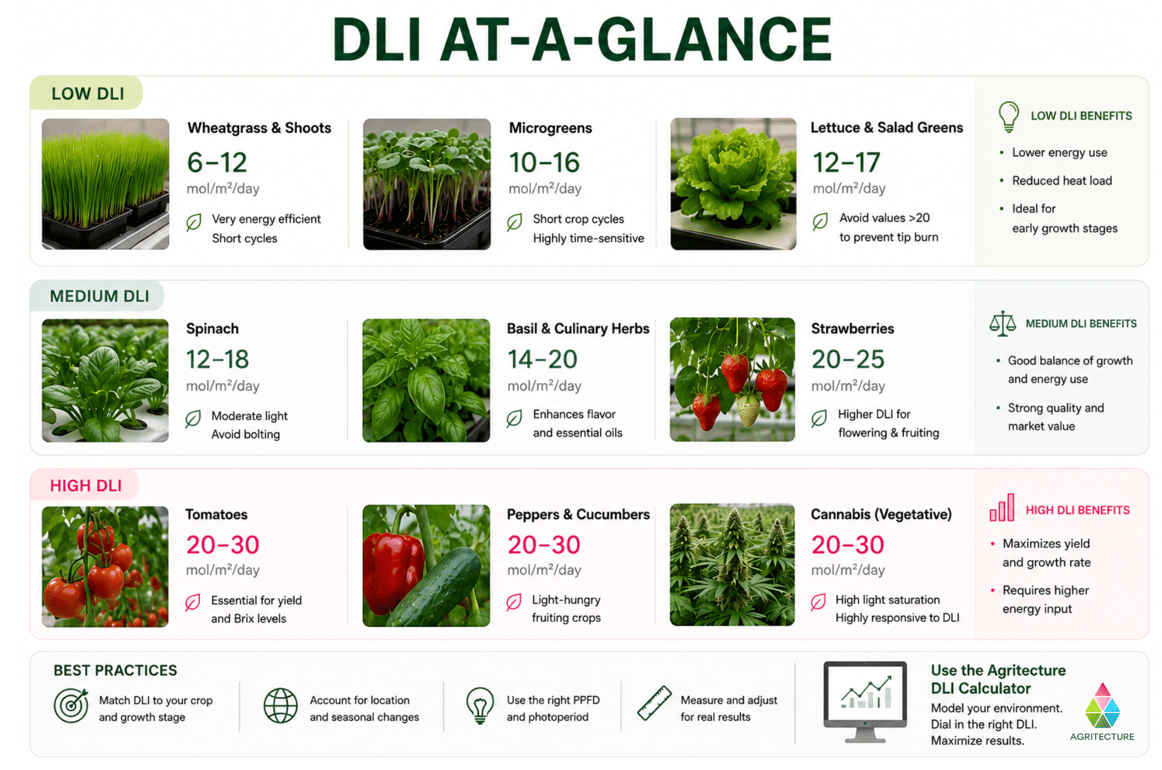
Source: Illustration generated with AI.
The second is failing to account for seasonal variation in greenhouse operations. Natural DLI fluctuates significantly with season and latitude. A greenhouse in a northern climate may receive adequate natural DLI in summer but drop to 3–5 mol/m²/day in winter. Growers who size supplemental lighting for average conditions rather than lowest-light months will underperform for a significant portion of the year. Our DLI Calculator lets you model this by location month by month, which is the exact kind of analysis that should happen before fixture decisions are made.
The third is treating DLI as an operational variable rather than a design input. Equipment choice alone doesn't guarantee the right DLI delivery for your specific crop and environment. How you specify, install, and operate that equipment matters just as much. Choosing the right grow lights requires knowing your DLI targets first, not after.
Why Investors and Lenders Are Paying Attention
DLI is increasingly showing up in due diligence conversations, and not just at the agronomic level.
Difficulty accessing funding is one of the top financial challenges for indoor farms (trailing only energy and labor costs). Capital has grown more selective since the venture downturn of 2022–2023, and investors are now prioritizing operators who can demonstrate validated unit economics rather than speculative projections.
Lighting assumptions sit directly upstream of those unit economics. A feasibility model that projects tomato yields without accounting for supplemental lighting requirements in a low-light climate, or one that assumes unrealistically high DLI without modeling the associated energy cost, signals a gap in technical credibility that can delay or derail funding. Unit economics, such as energy efficiency in kWh per kg is now one of three non-negotiable financial metrics investors and lenders scrutinize before committing capital. DLI assumptions account for a large portion of that number.
The Question Worth Asking Before You Spend
Lighting investment decisions in CEA are not just about which fixture has the best efficacy rating. They are about whether the light you are buying will actually deliver the DLI your crop needs, in your environment, across all seasons, at a cost that holds up in your financial model.
That is a harder question than most lighting conversations address.
WANT HELP WORKING ON YOUR NUMBERS?
Our team can walk through your specific crop, climate, and facility with you.