
May 11, 2026
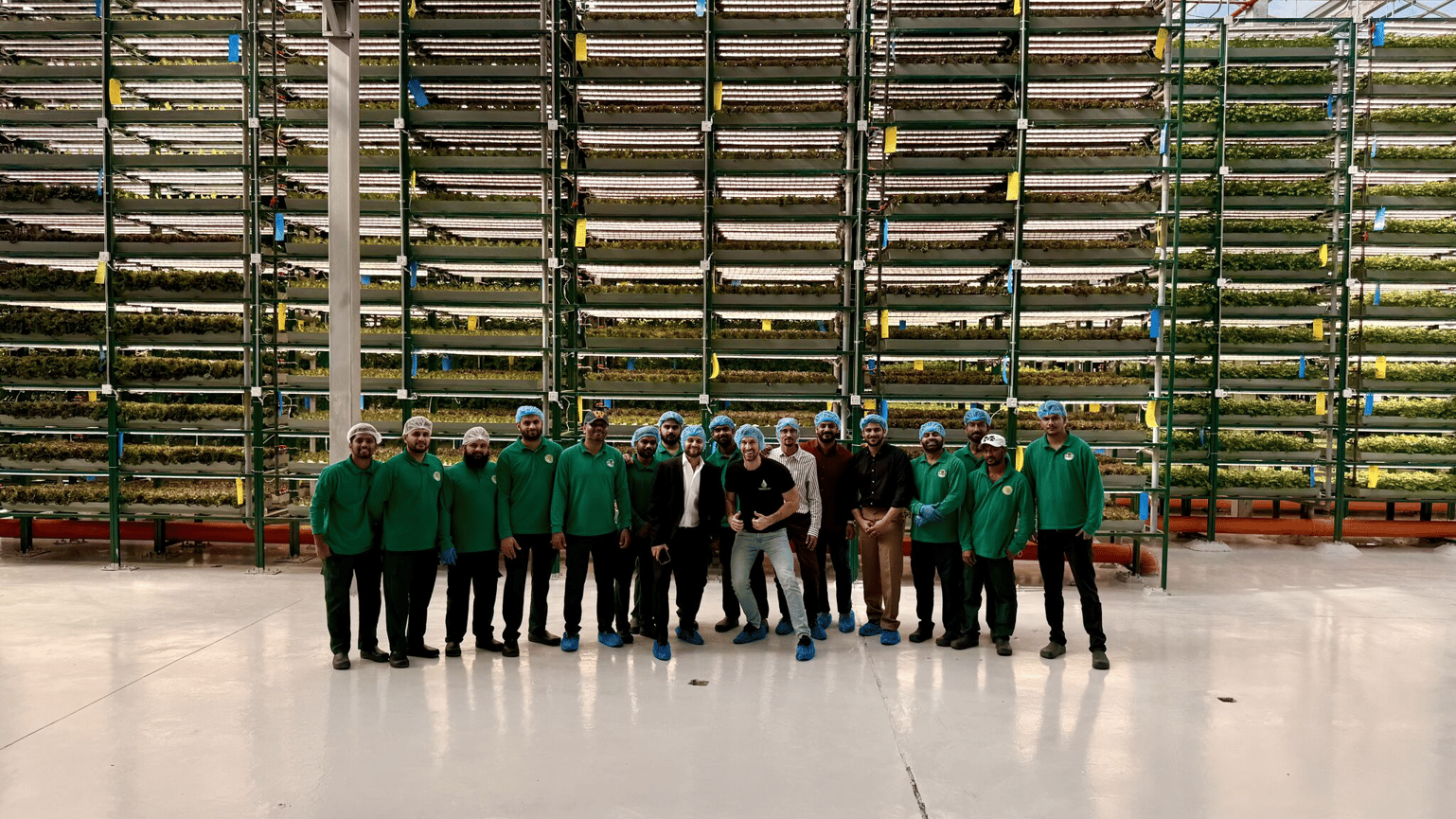
Agritecture visiting Sokovo Nature Farms, Dubai
Written by Niko Simos, Agritecture Business Development Manager - LinkedIn www.linkedin.com/in/nikos-simos
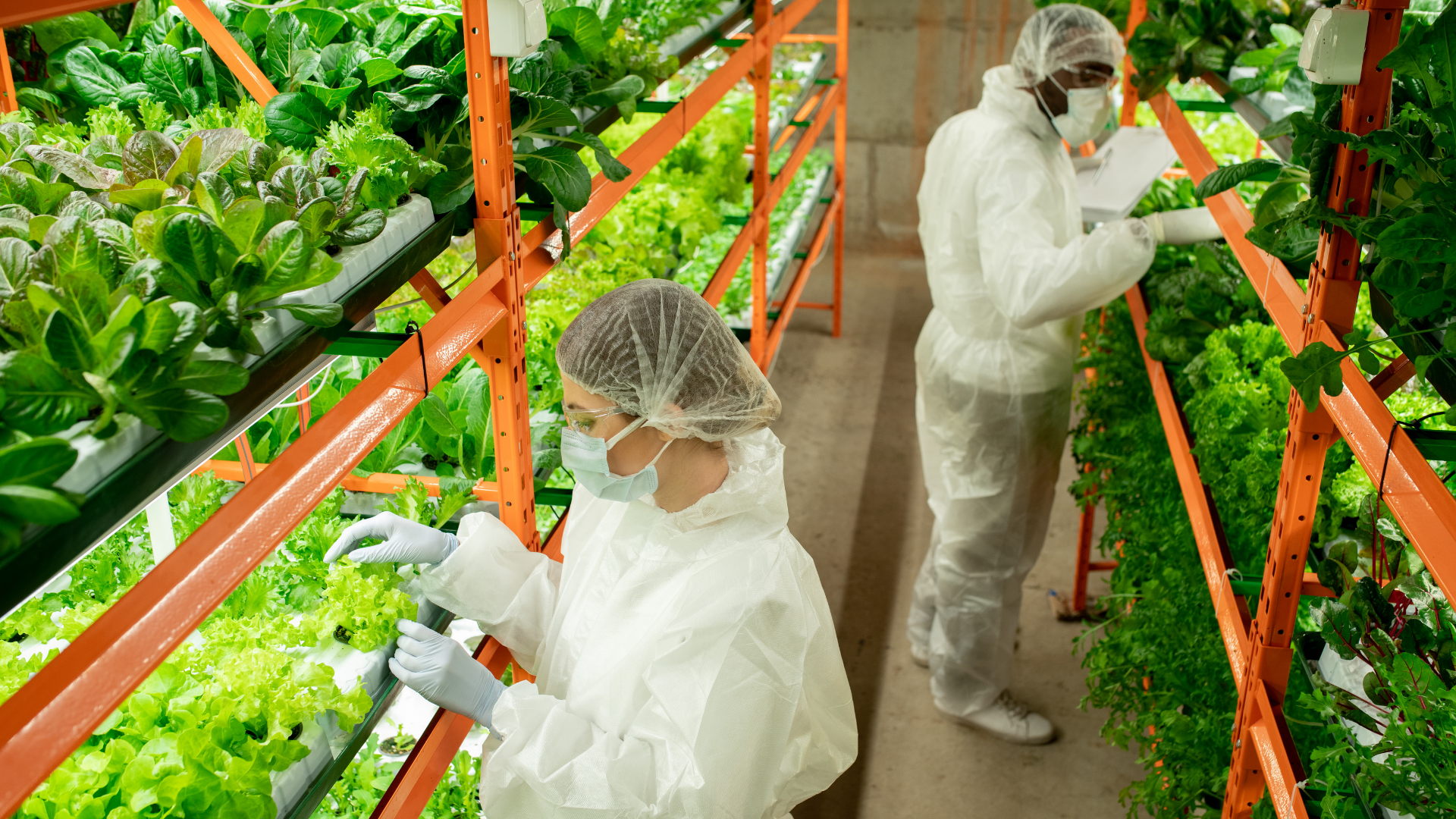
Vertical farming has become the poster child of the controlled environment agriculture (CEA) movement. Pictures of glowing pink LEDs and floor-to-ceiling stacks of leafy greens have inspired entrepreneurs, investors, and city planners around the world. But behind those Instagram-friendly shots is a real, complex business that has humbled many well-funded operators.
Done right, a vertical farm can deliver fresh, pesticide-free produce year-round with up to 95% less water and a tiny land footprint. Done wrong, it’s a capital-intensive way to lose money. The difference almost always comes down to planning.
If you’re thinking about starting a vertical farming business, here’s a practical roadmap, the same one we’ve walked through with hundreds of clients.
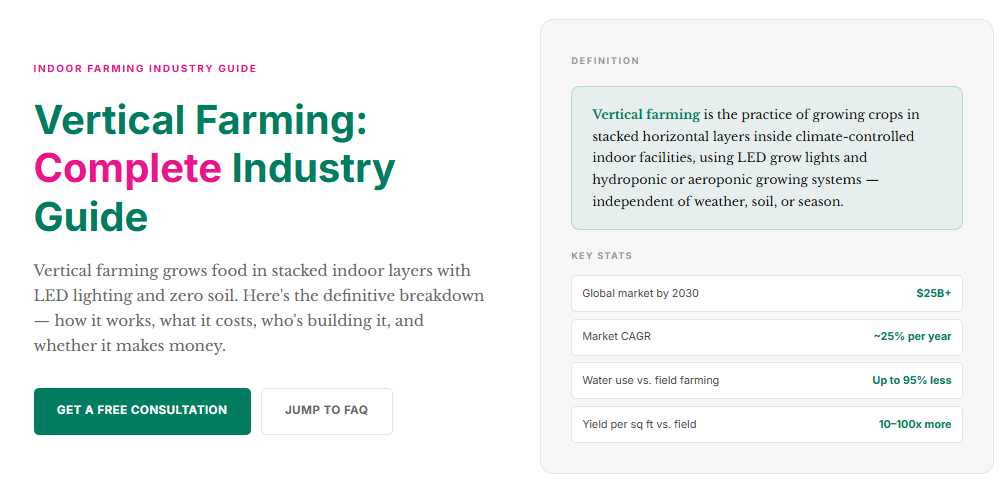
Learn more about Vertical Farming
Step 1: Define Your “Why” and Your Market
Before you even think about racks, lights, or seeds, get clear on three things: who you’re selling to, what they’ll pay, and why they’ll choose you over the competition. The most common reason vertical farms fail isn’t technical, it’s commercial. They build a beautiful operation in search of a market.
Strong starting points: chefs and restaurants who value freshness, premium grocery chains, hospitals or institutions with consistent demand, or specialty crops like microgreens, edible flowers, and rare herbs that command higher prices. Commodity lettuce competes against $1.99 clamshells from California, so unless you have a serious cost or quality edge, that’s a tough opening play.
Step 2: Pick the Right Crops
Crop selection drives almost every other decision: lighting, nutrients, layout, automation, even labor. The right crops for a beginner vertical farm are typically:
- Leafy greens: lettuces, arugula, kale, spinach, bok choy.
- Herbs: basil, mint, cilantro, parsley, chives.
- Microgreens: high margin, fast turnover, low capex.
- Edible flowers and specialty crops: niche, premium, often underserved.
Crops to avoid in your first year: strawberries, tomatoes, peppers, root vegetables. These can absolutely work in vertical farms (and Agritecture has helped many clients launch them), but they require deeper experience, taller systems, and more capital.
Step 3: Choose Your Growing System
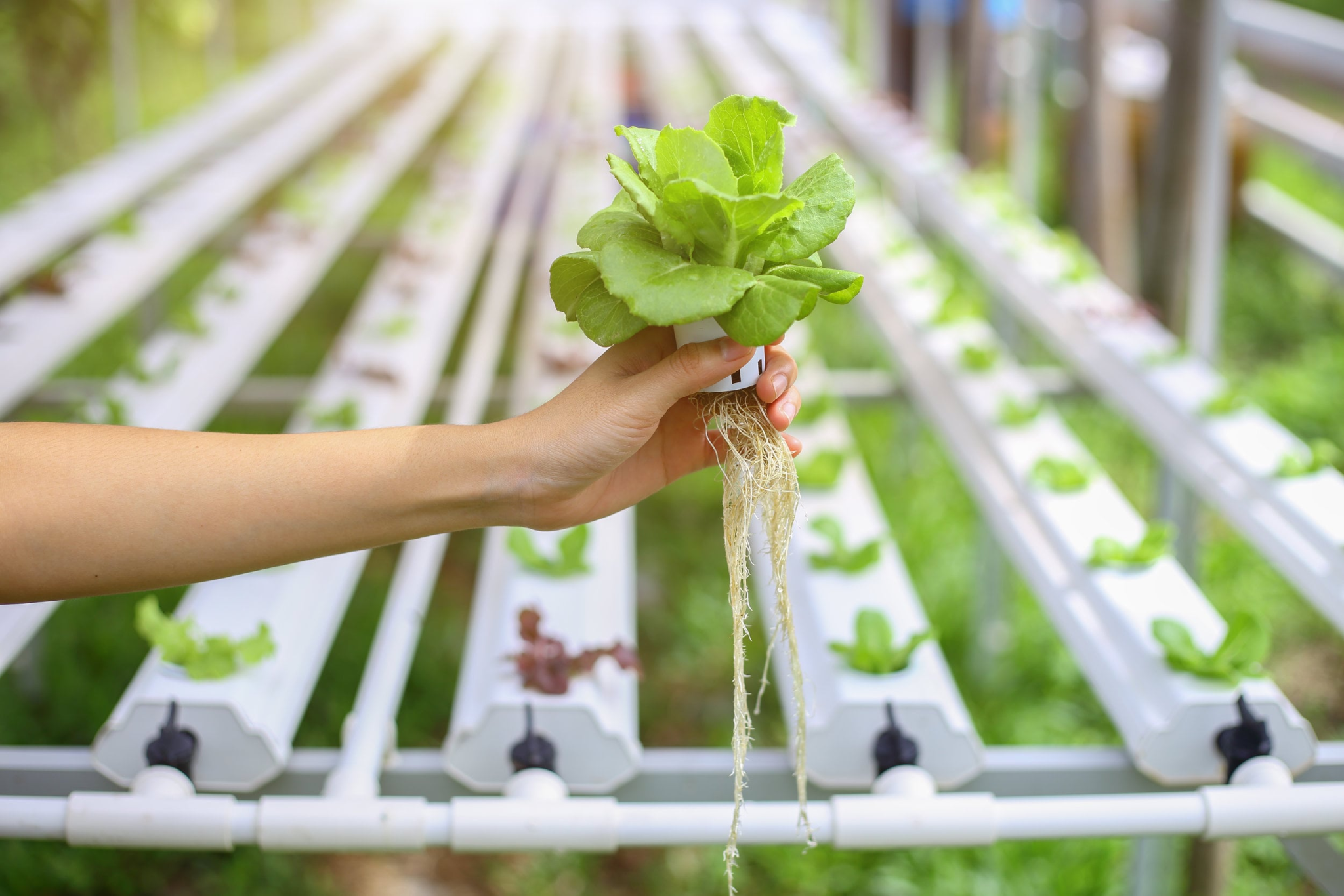
Most vertical farms use one of three hydroponic systems: deep water culture, nutrient film technique, or aeroponics. Some integrate aquaponics or hybrid models. Each has trade-offs in cost, complexity, and crop fit. There’s no universally “best” system, only the best system for your specific business plan.
This is also where you’ll decide between off-the-shelf modular systems (like container farms), build-your-own racks, or turnkey solutions from technology providers. Each path has wildly different cost structures and timelines.
Step 4: Find the Right Site
A common mistake is locking in a site too early or for the wrong reasons. Key factors to evaluate:
- Ceiling height: critical for stacking efficiency.
- Floor load: water-heavy systems demand structural strength.
- Power capacity and electricity rates: lighting is your biggest ongoing cost.
- HVAC requirements: indoor climates must be tightly controlled.
- Water and drainage access.
- Proximity to your customers: every mile of distribution adds cost and reduces freshness.
- Zoning and permits: rules vary dramatically between municipalities.
Step 5: Build a Realistic Financial Model
This is where many founders fall in love with their concept and fall out of love with reality. A solid vertical farm pro forma should cover:
- Capex: facility build-out, growing system, lighting, automation, HVAC, software.
- Opex: labor, electricity, packaging, nutrients, seeds, distribution.
- Yields per square foot, by crop, by month, including realistic ramp-up.
- Pricing assumptions backed by actual buyer conversations.
- Break-even timeline and cash runway.
Vertical farms typically take 18–36 months to reach steady-state profitability. Plan for that, not for a hockey stick out of the gate.
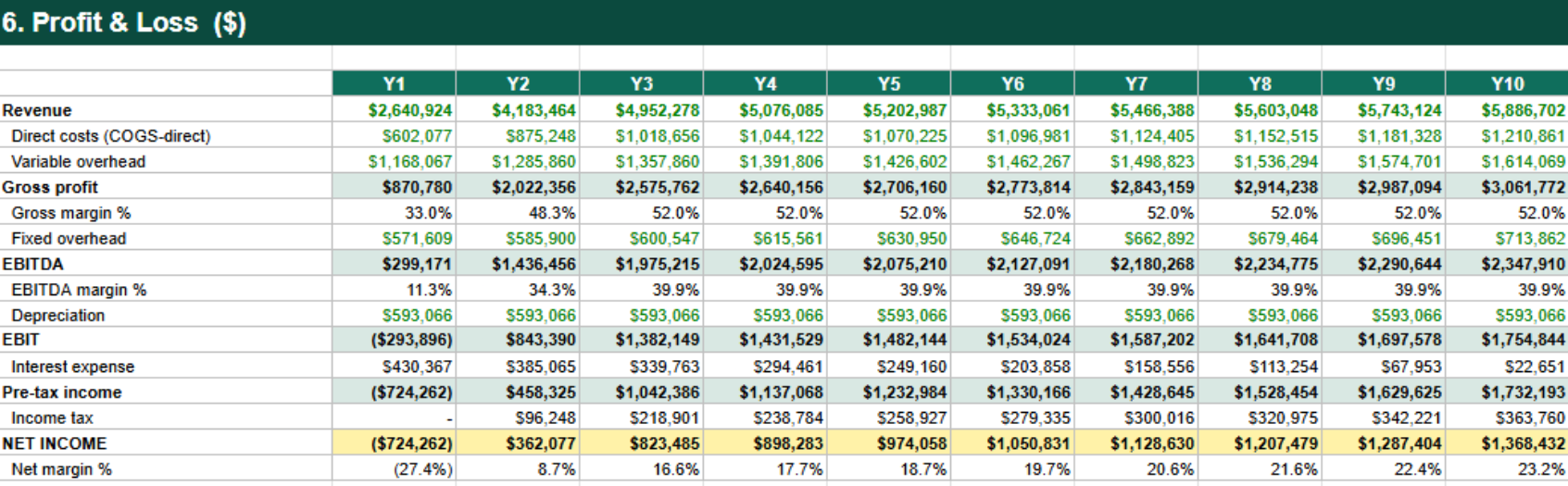
Financial Model Sample
Step 6: Plan Operations Before You Build
How will seeds get from delivery to germination station? Who packs and labels each order? When do you sanitize? What’s your pest management protocol if you find one aphid in week 12? Vertical farms are food production facilities first, technology projects second. Standard operating procedures (SOPs), food safety certifications, and trained staff are non-negotiable.
Step 7: Choose Your Technology Stack Carefully
Sensors, climate controllers, fertigation systems, automation, traceability software, the technology layer can either supercharge your operation or quietly bleed your margin. Avoid stitching together a Frankenstein of tools you can’t maintain. Pick proven providers, prioritize integrations, and design for the team you actually have, not the team you wish you had.
Step 8: Launch Lean, Then Scale
The most successful vertical farming entrepreneurs we’ve worked with start small. They prove out their crops, customers, and operations in a pilot facility before raising big capital or building a flagship. They iterate, document, and let the numbers, not the renderings, drive expansion.
Common Mistakes to Avoid
- Building before securing offtake agreements with buyers.
- Underestimating energy costs and HVAC requirements.
- Choosing crops based on excitement, not unit economics.
- Buying the most expensive automation before you understand your workflow.
- Hiring growers from traditional ag without CEA training, or vice versa.
Read here: 5 Mistakes Vertical Farming Make
The Bottom Line
Vertical farming is a real, growing industry, with real businesses generating real revenue, but it rewards discipline, not enthusiasm. The founders who succeed treat their farm as a serious business and invest as much in market research, financial modeling, and operations as they do in technology. They build relationships with chefs and grocers before they build racks. They hire growers who understand both biology and unit economics. And they obsess over energy efficiency because they know it’s the line item that quietly decides whether the business works.
Vertical farming is not the right answer for every crop, every climate, or every entrepreneur, but for the right operator with the right plan, it remains one of the most exciting opportunities in agriculture today. If you’re ready to do it right, you’re in good company, and you don’t have to figure it out alone.
Ready to build a vertical farm that actually works?
Agritecture has helped launch and de-risk vertical farming projects all over the world. From feasibility studies and financial models to system selection and site planning, we’ll help you avoid the most expensive mistakes in CEA.