
Mar 27, 2026
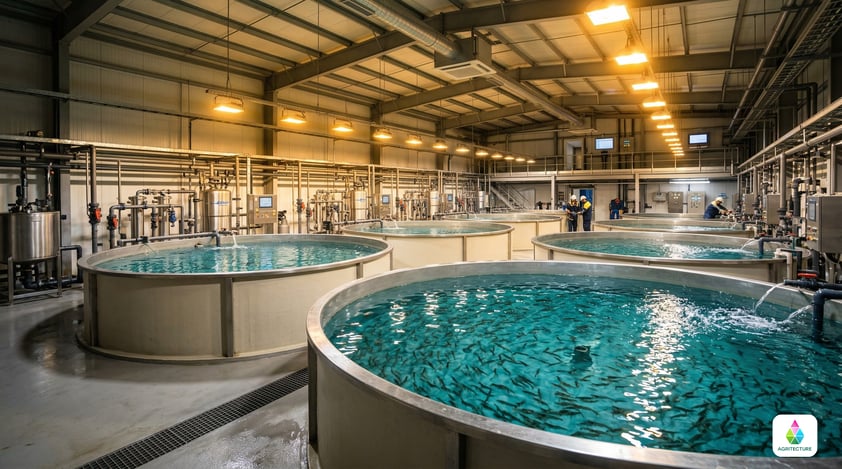
Image 1: Shrimp cultivation in a modern recirculating aquaculture system (RAS).
Shrimp has a reputation problem and a popularity problem at the same time. It’s one of the world’s most consumed seafoods, versatile, protein-rich, and beloved across virtually every cuisine on Earth. Yet the moment you say “shrimp farm,” many people picture bulldozed mangroves, antibiotic-laced ponds, and muddy runoff flowing into coastal waters. That tension is not going away on its own. But a new generation of producers thinks the answer might lie inland, inside greenhouses, containers, and tightly engineered closed-loop systems that look a lot more like a vertical farm than a pond in Southeast Asia.
At Agritecture, we spend a lot of time thinking about what Controlled Environment Agriculture (CEA) really means. Most people associate it with leafy greens under LED lights. But the logic of CEA, precise control over inputs, year-round production near urban markets, biosecure environments, dramatically reduced water and land use, applies just as powerfully to aquaculture. And the most commercially interesting case right now is shrimp.
|
“Indoor shrimp farming is less like ‘putting shrimp in a tank’ and more like building a tiny water-treatment plant that happens to grow shrimp as its product.” |
Why Shrimp, and Why Now?
The Pacific whiteleg shrimp (Litopenaeus vannamei) is, by sheer volume, the most produced aquaculture species on the planet, approximately 6.8 million tonnes annually according to FAO data. It dominates because it grows fast, tolerates a wide range of salinities, and has decades of selective breeding and hatchery infrastructure behind it. If you’re going to farm shrimp indoors, this is almost always your starting species.
The conventional model is coastal ponds, extensive or semi-intensive operations concentrated in Southeast Asia and Latin America. These systems can be cost-efficient at scale, with intensive ponds yielding 5–20 tonnes per hectare per year. But they carry a well-documented environmental ledger: habitat conversion, effluent discharge, high water exchange, and persistent disease pressure that drives antibiotic use.
It’s that last point—disease—that has quietly accelerated interest in indoor systems. Shrimp farm disasters are not gradual. Early Mortality Syndrome (EMS) and White Spot Syndrome Virus (WSSV) have wiped out entire harvests within days. Biosecurity isn’t just an environmental bonus in shrimp farming; it is the business model.
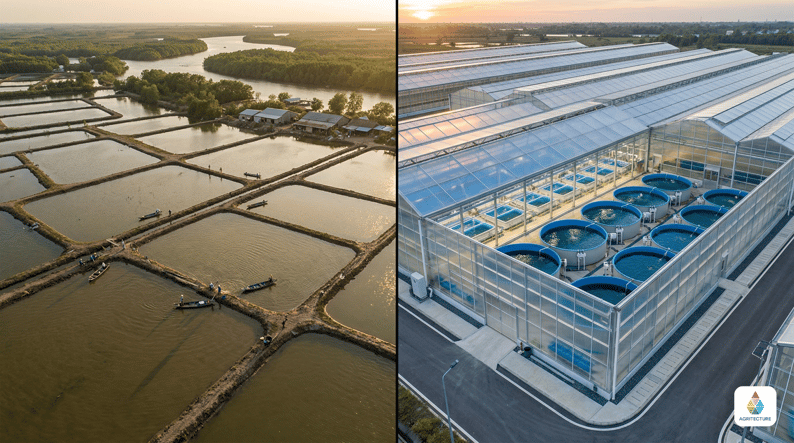
Image 2: Traditional pond shrimp farming (left) vs. a controlled indoor system (right). The contrast in footprint and environmental exposure is stark.
The CEA Toolkit for Shrimp: RAS, Biofloc, and Aquaponics
Controlled-environment shrimp production currently runs on three main system types, each with a different engineering philosophy:
-
Recirculating Aquaculture Systems (RAS) treat and recirculate nearly all the water. Daily exchange rates fall below 1%, compared to 8.5% in pond operations. The trade-off is infrastructure intensity: pumps, biofilters, degassers, UV sterilizers, and oxygen injection replace land and water with capital and electricity.
-
Biofloc Technology (BFT) takes a different route: instead of mechanically filtering waste, it cultivates communities of beneficial microbes that consume nitrogen and can themselves serve as supplemental feed for the shrimp. Super-intensive BFT systems can stock above 300 shrimp per cubic meter and yield 3–6 kg/m³ per cycle. It requires heavy aeration and precise management of the microbial community, but it can reduce external biofilter hardware and potentially lower feed costs.
-
Aquaponics and Integrated Systems close the nutrient loop a step further, routing shrimp waste into plant production. Marine aquaponics with halophytic plants (salt-tolerant crops) is an active area of research, with promising results for reducing discharge and diversifying revenue. Integrating oysters and seaweed alongside shrimp, offers dual advantages: water cleaning and an additional marketable crop.
The Greenhouse Advantage, and the Honest Limits
For CEA practitioners, the greenhouse is a familiar canvas. Its strengths translate directly to shrimp production in colder or landlocked climates: passive solar heating reduces energy loads, the enclosed structure enforces biosecurity, and the fixed footprint suits urban or peri-urban siting. Greenhouse biofloc systems can be built relatively modularly, and one economic model for a small greenhouse BFT system found payback periods in the range of 1.4–2.9 years under favorable biological and market assumptions.
Container farms take the concept further—maximum modularity, rapid deployment, minimum footprint. A realistic container operation producing 1,500 kg/year faces annual operating costs—feed, postlarvae, electricity, salt, consumables, maintenance, labor, and cold-chain packaging—that stack up to a break-even price around $25/kg before any capital recovery. That’s not a red flag; it’s a market flag. Container shrimp is a premium, near-market play, not a commodity strategy.
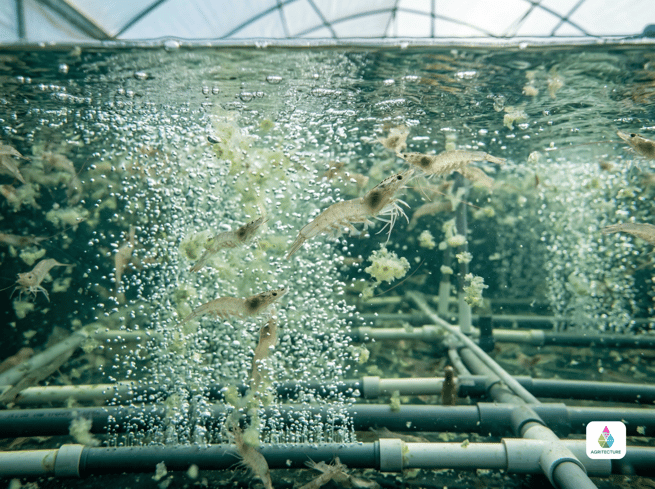
Image 3: A biofloc greenhouse system in operation. The milky, aerated water contains billions of beneficial microbes that manage nitrogen and supplement shrimp feed.
The economics of closed systems come down to three variables that indoor farm operators know intimately: labor per kilogram (the most frequent deal-breaker at small scale), energy per kilogram (especially punishing in cold climates without heat recovery or solar integration), and realized sale price (farmgate or direct-to-chef, not retail). Nail all three and the model works. Miss any one and the physics of pumps, oxygen, and temperature control shows up on your monthly bills without mercy.
What CEA Shrimp Gets Right That Ponds Cannot
Beyond economics, closed-system shrimp production has genuine structural advantages that align with where food systems are heading:
- Antibiotic-free potential: The logic chain is simple—better biosecurity means less disease, which means no antibiotic pressure. Closed systems don’t automatically eliminate residue risk (inputs and postlarvae still require scrutiny), but they materially reduce the pathogen pathways that drive antibiotic use in open ponds. In an era when EU and US regulators are tightening import residue standards and border rejections for antibiotic-contaminated shrimp remain a persistent trade issue, this is a real commercial differentiator.
- Location independence: A shrimp farm in landlocked Kansas or suburban Rotterdam is now technically feasible. Proximity to consumers means fresher product, lower cold-chain costs, and the kind of “local seafood” story that commands a premium in urban restaurant and grocery channels.
- Water stewardship: In regions facing water scarcity, the ability to run a protein farm on less than 1% daily water exchange is not a niche selling point—it is a survival requirement. CEA shrimp can be part of a genuinely circular water economy.
- Traceability and trust: Every input, every water test, every feeding event in a closed system can be logged and verified. For a species with a complex global supply chain and a documented history of mislabeling and fraud, farm-level traceability is a powerful market asset.
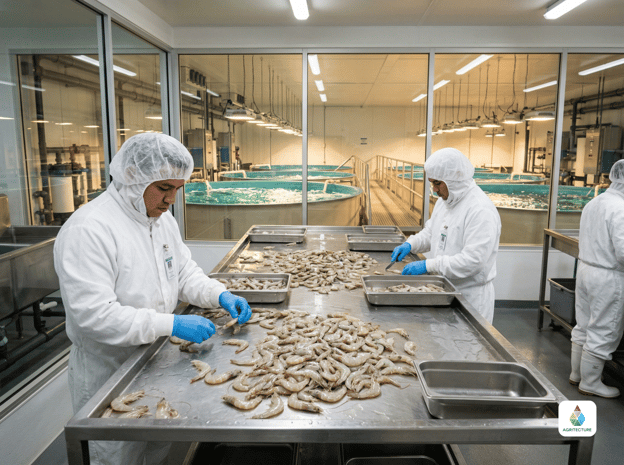
Image 4: Harvest day at an indoor shrimp facility. Closed-system production enables full traceability from postlarvae to plate.
The Agritecture Perspective: Where Does CEA Shrimp Fit?
At Agritecture, we evaluate food production systems through a clear lens: does the technology match the market, the resource context, and the skill set of the operator? For CEA shrimp, our honest assessment looks like this:
The technology is proven. RAS, biofloc, and aquaponics each have functioning commercial references and a growing body of peer-reviewed performance data. The biology works. Whiteleg shrimp can absolutely thrive in a carefully managed closed system, achieving feed conversion ratios of 1.3–1.5 with good husbandry—comparable to the best pond operations.
The market opportunity is real but narrow. Indoor shrimp makes economic sense when you can sell at a premium (“local,” “antibiotic-free,” “farm-to-table”), when you are located near population centers that lack access to fresh seafood, or when biosecurity constraints in your region make open-pond production genuinely risky. It does not make sense as a direct cost competitor to commodity shrimp imports from Vietnam or Ecuador.
The critical next frontier is energy. As the land-based aquaculture sector matures and more capital flows toward it the farms that will win are those that integrate renewable energy, capture waste heat intelligently, and automate the labor-intensive monitoring loops that currently make closed-system operation so management-heavy.
|
CEA shrimp is not “shrimp farming, just indoors.” It is shrimp farming + water engineering + energy management + market strategy. Get all four right, and you have something genuinely exciting. |
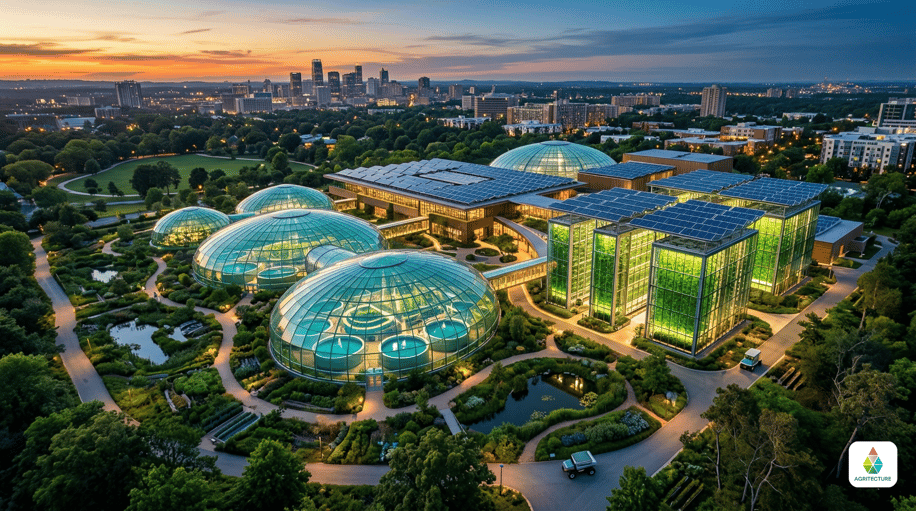
Image 5: The future of protein and produce: integrated CEA campuses combining aquaculture and crop production, powered by renewables.
The Bottom Line
Shrimp has earned its place at the center of the global seafood conversation—and the controlled environment agriculture community has a legitimate claim to reshape how it’s produced. The tools exist. The market appetite is there. The environmental case is compelling. What the sector needs now is a wave of operators who understand both the biology and the business—who can design systems that are energy-smart, biosecure, labor-efficient, and connected to premium urban markets.
If you are exploring shrimp production as part of a CEA project or AgTech investment, we’d love to hear from you. The future of seafood might just be growing in a greenhouse near you.
|
THINKING ABOUT AN INDOOR AQUACULTURE PROJECT? Work with the world’s leading CEA consultancy Agritecture has helped hundreds of farmers, investors, and food companies design, plan, and stress-test controlled environment food systems — from leafy greens to shrimp. Whether you’re evaluating feasibility, building a business plan, or designing a facility, our team brings the data, the experience, and the honesty you need to make smart decisions. ✓ Feasibility Studies & Business Plans ✓ Facility Design & System Selection ✓ Market & Financial Modeling ✓ Technology & Vendor Advisory → Get in touch at https://www.agritecture.com/consulting-request |
Frequently Asked Questions
Can shrimp really be farmed indoors, anywhere in the world?
Yes — technically. Pacific whiteleg shrimp tolerate a wide range of salinities and can thrive in recirculating or biofloc systems built anywhere with electricity and access to water. The bigger question is economic: the further you are from the tropics, the more energy you spend heating water, and the more your cost-per-kilogram climbs. Inland and northern-climate farms are viable, but they need a premium market to match.
How much water does a closed-system shrimp farm actually use?
A well-run RAS shrimp system exchanges less than 1% of its water volume per day. Compare that to conventional ponds in Ecuador, which average around 8.5% daily exchange — equivalent to roughly 77,000 cubic meters of water per tonne of shrimp produced. Closed systems are genuinely water-efficient, making them relevant even in water-scarce regions.
Is indoor shrimp antibiotic-free?
Closed systems significantly reduce — but don’t automatically eliminate — antibiotic pressure. The logic is: fewer disease pathways → less disease → less need for antibiotics. But the postlarvae you stock, the feed you use, and your biosecurity protocols all still matter.
What does indoor shrimp actually taste like compared to imported shrimp?
Fresher. That’s the consistent feedback from chefs and consumers who’ve tried locally farmed indoor shrimp versus thawed imports. A shrimp harvested 50 km from your kitchen and delivered the same day is a genuinely different eating experience.
What is biofloc technology and why does it matter?
Biofloc technology (BFT) is a system management approach where microbial communities — bacteria, microalgae, protozoa — are cultivated directly in the grow-out tank. These microbes consume nitrogen from shrimp waste, keeping water quality stable without heavy mechanical filtration. They also serve as supplemental nutrition for the shrimp, which can reduce feed costs by 10–20%. BFT is one of the most promising pathways for making indoor shrimp more economically accessible.
Can shrimp production be integrated with plant growing, like in aquaponics?
Yes, and it’s an active area of research and commercial development. Marine aquaponics pairs shrimp with salt-tolerant crops (halophytes) like sea purslane or salicornia.
How profitable is a small greenhouse or container shrimp farm?
Honest answer: it depends entirely on your sale price. A realistic container-scale operation (around 1,500 kg/year) can face a break-even cost in the mid-$20s per kilogram once full overhead is included.
What’s the biggest mistake first-time indoor shrimp farmers make?
Underestimating labor and overestimating yield. Closed shrimp systems require constant monitoring — water chemistry, feeding, biosecurity checks, equipment maintenance. Many early operators design for biology (stocking density, FCR, cycle time) but underdesign for labor efficiency. The farms that succeed long-term are those that systematically reduce the labor cost per kilogram through smart layout, automation, and trained staff — not just those that grow the most shrimp per tank.