
May 26, 2026
By Agritecture
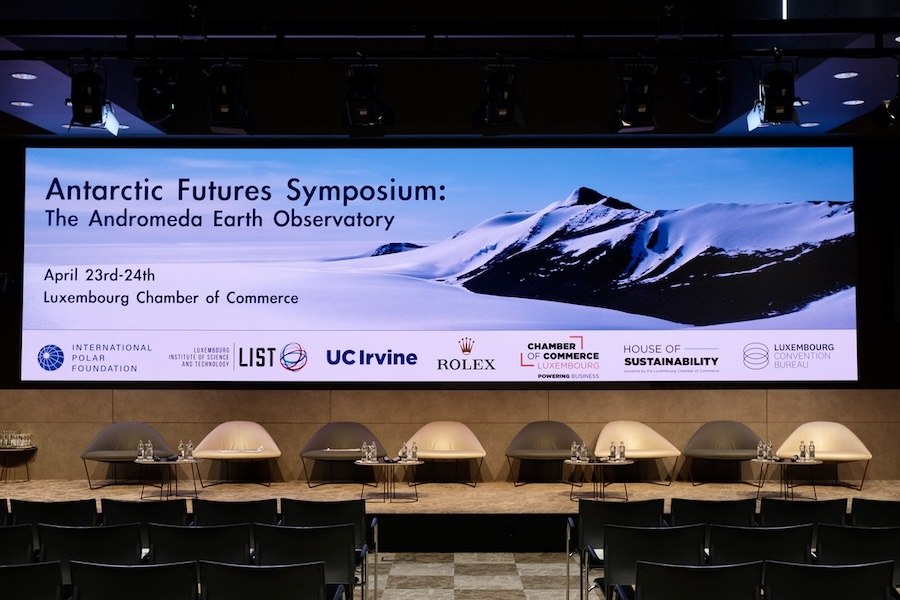
On 23–24 April 2026, the Antarctic Futures Symposium (AAFS) transformed Luxembourg’s Chamber of Commerce into a platform for global dialogue on the future of polar research.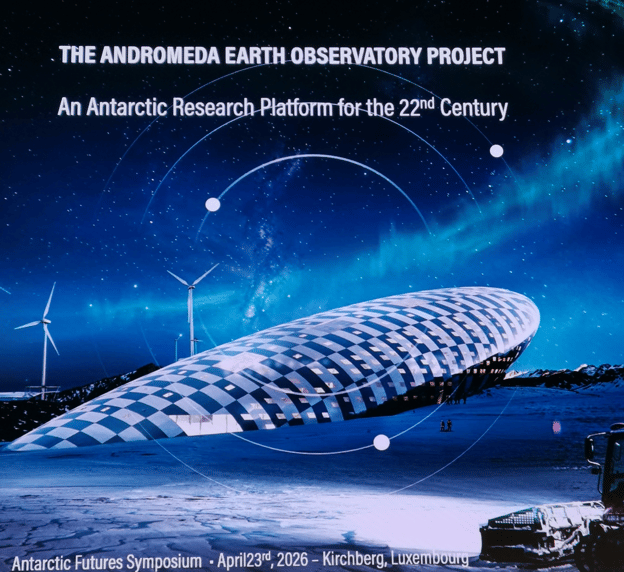
Organised by the International Polar Foundation (IPF) in collaboration with the Luxembourg Institute of Science and Technology (LIST) and the House of Sustainability, the symposium brought together scientists, engineers, policymakers and investors to develop a shared vision for the Andromeda Earth Observatory: a next‑generation, zero‑emission research station planned for inauguration during the fifth International Polar Year in 2032–33. The symposium’s organisers described it as a “high‑level, forward‑looking forum” designed to shape the scientific focus and collaboration pathways of the Andromeda project.
The Challenge
Designing a 22nd‑century polar research station
Antarctica plays a critical role in regulating the Earth’s climate system. Yet conducting research there requires infrastructure that can withstand extreme cold, isolation and logistical constraints. The Andromeda Earth Observatory aims to be a zero‑emission, internationally managed station that will support climate science, applied research and Earth‑observation programmes. It will build upon IPF’s experience operating the Princess Elisabeth Antarctica station (the world’s first zero‑emission polar research station inaugurated in 2009) and expand the scope to include new technologies and broader participation.
The challenge is multifaceted:
- Energy autonomy and sustainability: The station must operate without fossil fuels and rely entirely on renewable energy. Plans include solar arrays, wind turbines, closed‑loop water and waste cycles, smart grids and advanced materials.
- Infrastructure and logistics: Construction in Antarctica demands specialised engineering. The observatory is envisioned as a living laboratory where engineers can experiment with energy systems, automation, alternative fuels and space‑agriculture technologies.
- Scientific breadth: The station’s three pillars, Antarctic university hub, dedicated R&D centre and ground station, must accommodate diverse research disciplines from glaciology and oceanography to robotics and life‑support systems.
- International collaboration: The project invites countries with limited Antarctic infrastructure to participate. Aligning multiple stakeholders, universities, governments, industry partners and investors, is a complex diplomatic and organisational task.
Why convene a symposium?
To tackle these challenges, IPF and its partners organised the Antarctic Futures Symposium. The event served to define and consolidate the scientific focus of Andromeda while exploring collaboration and financing pathways.
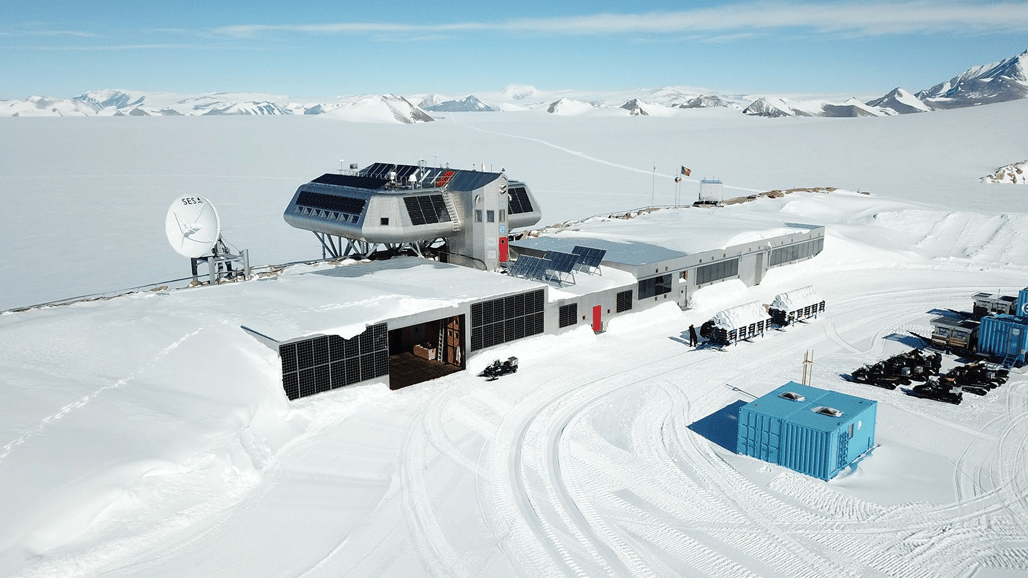
Princess Elisabeth Antarctica station
The Solution
A platform for dialogue and planning
The symposium’s programme combined plenary sessions, thematic panels and working groups. Attendees could participate in the entire event or select specific days or sessions. Highlights included:
Opening session
The opening plenary was moderated by Jean de Pomereu of the IPF and featured contributions from Luxembourg Chamber of Commerce Director General Carlo Thelen, IPF founder Alain Hubert, climate scientist Eric Rignot, LIST CEO Olivier Guillon, and a representative of the Belgian Government among others.
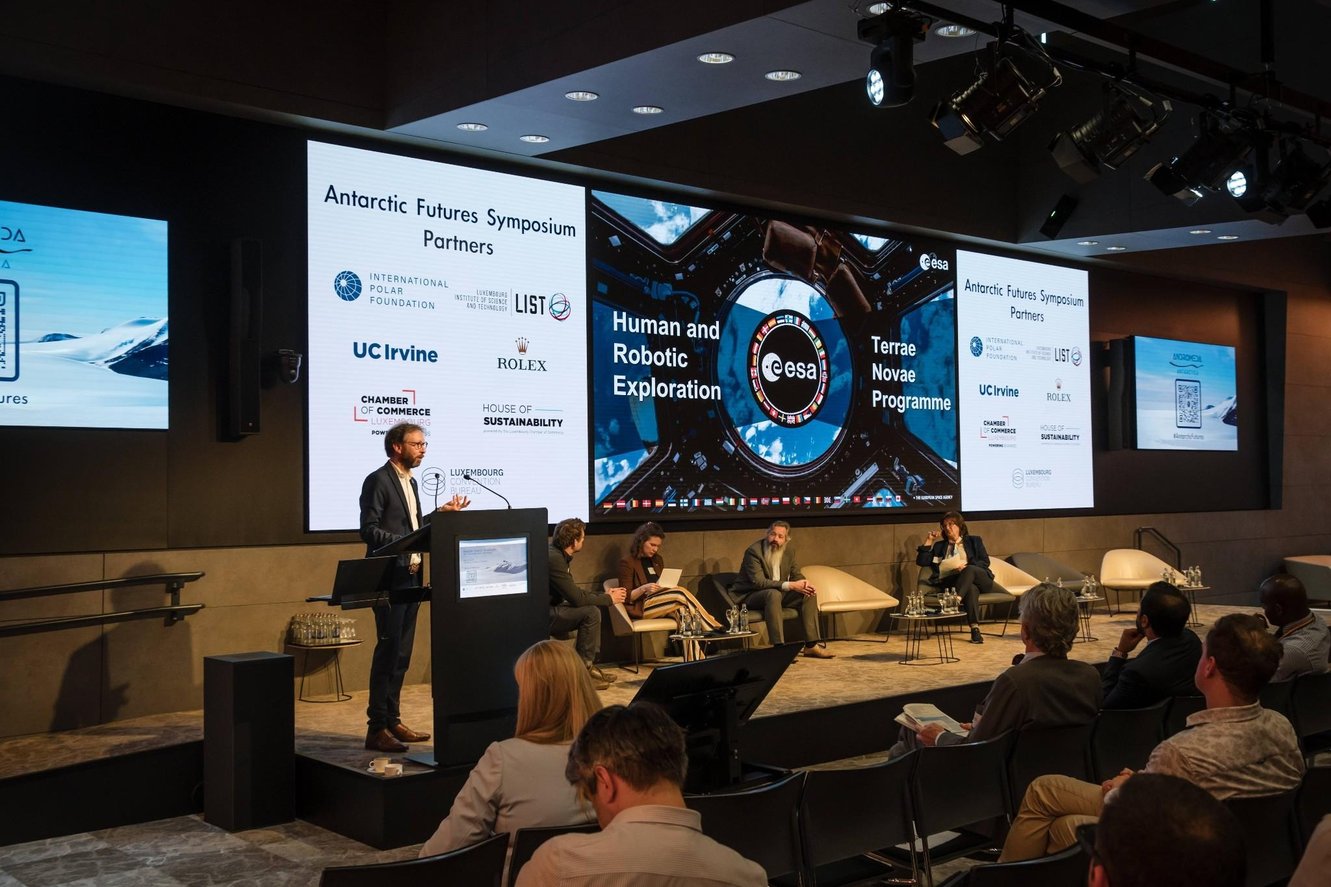
Building the station of the 22nd century
In Session 2, engineers and industry leaders discussed the Andromeda Earth Observatory’s design. Panelists from Schneider Electric, Prefalux, BESIX, Samyn and Partners, Redwire and other firms presented solutions for resilient energy systems, engineering for extreme environments, circular life support and water treatment.
Building the scientific case
Session 3 introduced the Science Advisory Committee chaired by Professor Isabella Velicogna. Scientists from universities and research institutes across the globe—ranging from the University of Bern and DTU to the University of Hong Kong and South Africa—outlined their research priorities for Andromeda.
Working groups
The second day focused on parallel working groups addressing topics such as building concepts, science support platforms, energy and mobility and life‑support systems & circularity. In the Life‑Support Systems & Circularity group, experts from organisations like Solar Foods, ESA, LIST and our company (represented by Alberto López with a talk on “Experiences towards Space Agriculture Design”) explored food production, closed‑loop biosystems and resource recovery. While our participation showcased industrial state of the art and engagement, the focus of the working group was to integrate multiple approaches such as microbial fermentation, resource recycling, climate‑resilient agri‑food systems and waste recovery into a comprehensive life‑support strategy.
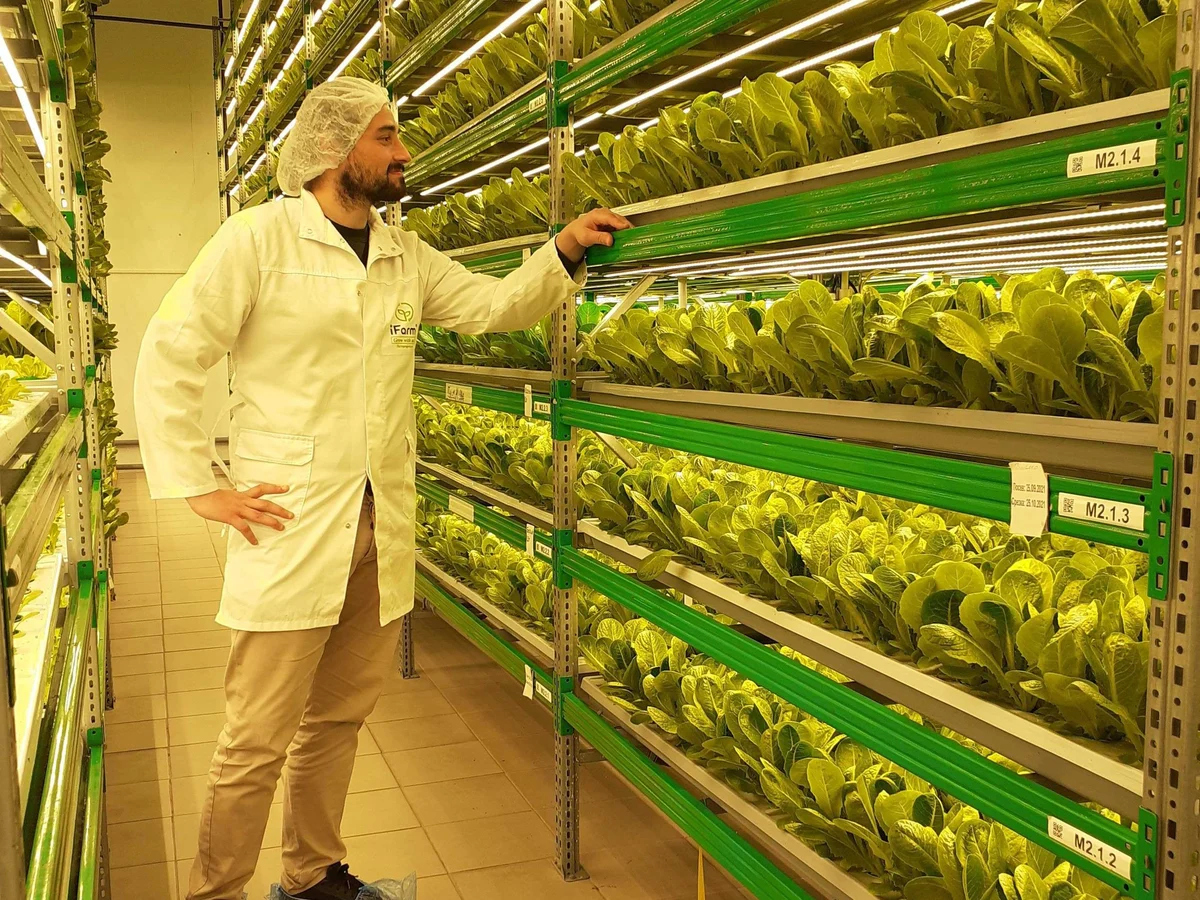
Alberto López, Agritecture Systems Engineer
Cross‑cutting themes
Across sessions, several recurring themes emerged:
- Climate science and Earth observation: Researchers emphasised the need to monitor polar ice sheets and understand sea‑level rise.
- Sustainable infrastructure and circular systems: Panels highlighted energy autonomy, closed‑loop systems, circularity and mobility solutions.
- Governance and financing: Discussions addressed governance frameworks and the Antarctic Treaty System, ensuring that the observatory aligns with international law and invites broad participation.
The Results
Advancing Andromeda’s vision
By the symposium’s conclusion, participants had made tangible progress toward a cohesive vision for the Andromeda Earth Observatory:
- Consolidated scientific priorities: The Science Advisory Committee began developing an overarching science plan that sets research goals and identifies required instrumentation.
- Engineering roadmaps: Industry sessions produced preliminary roadmaps for energy systems, station construction and life‑support integration.
- Political support: Speeches from government representatives underscored strong political backing. Luxembourg’s Minister of the Economy Lex Delles (via pre‑recorded message) praised projects like Andromeda for combining cutting‑edge technology, scientific excellence and long‑term vision.
- Commitment to inclusivity: Eric Rignot emphasised that “Antarctica should not be limited to a few nations” and that the project encourages participation from countries without existing Antarctic infrastructure.
- Engagement beyond research: The symposium concluded with a screening of the documentary 2050, which follows IPF Founder Alain Hubert and other scientists as they explore climate futures.
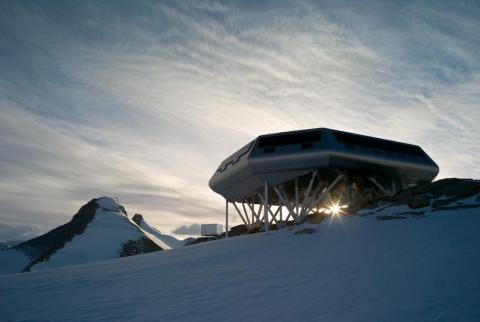
Princess Elisabeth Antarctica at Utsteinen Ridge, Sør Rondane Mountains, Dronning Maud Land
Impact on stakeholders
For scientists and universities, the symposium provided a platform to align research priorities and secure future access to the station. Industry partners gained insights into engineering requirements and potential commercial opportunities. Policymakers and investors saw how supporting Andromeda could yield both environmental and economic benefits.
Key Takeaways
- Antarctic research infrastructure is evolving toward zero‑emission, circular systems. Interdisciplinary collaboration is essential.
- Space technologies inform polar research.
- Inclusive participation enriches science.
- Public engagement matters.
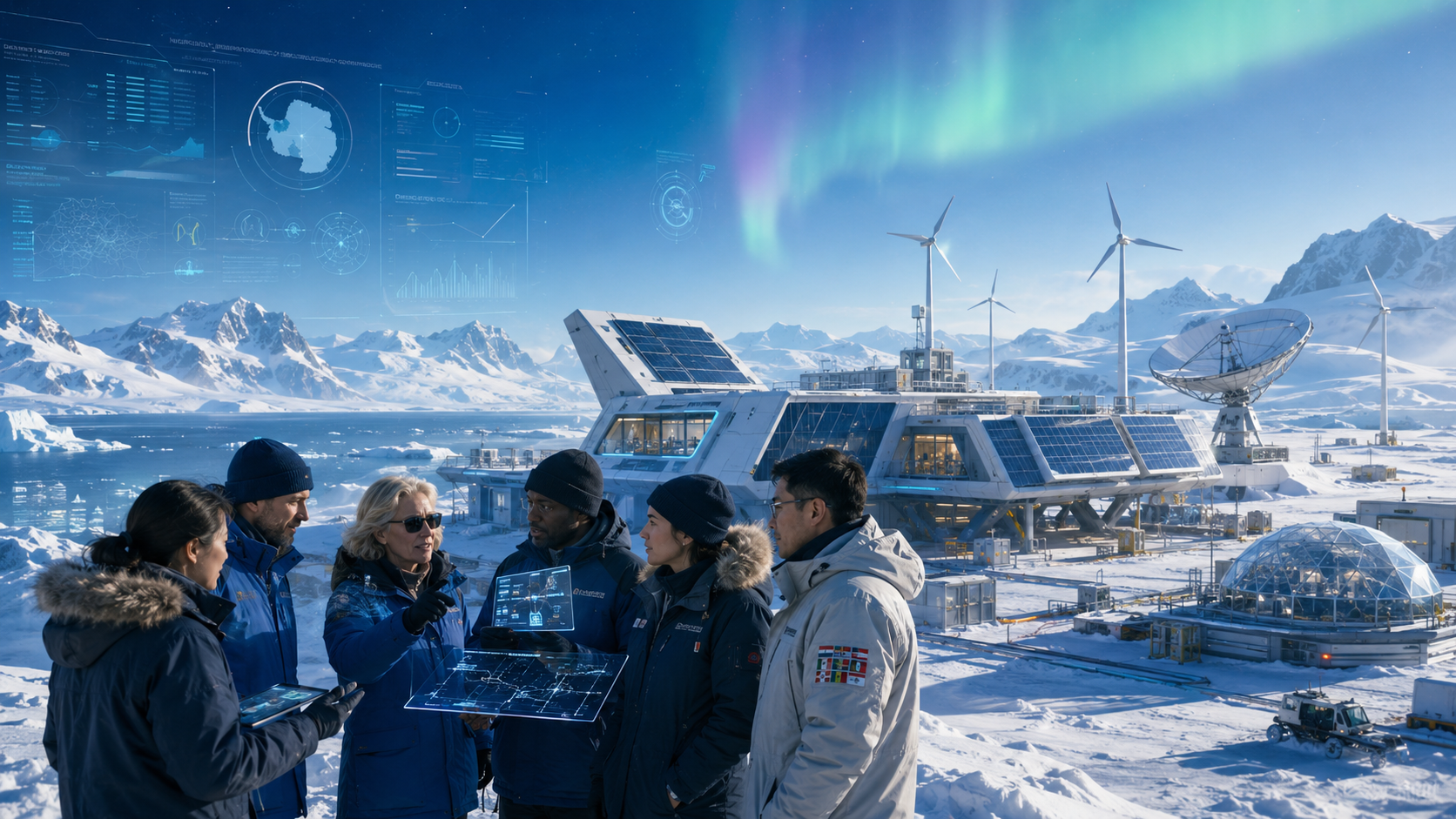
AI - image generated
Closing
The Antarctic Futures Symposium 2026 demonstrated the power of convening diverse stakeholders around a common goal: building a sustainable, internationally managed research station that will expand humanity’s understanding of our planet and our capacity to live sustainably. The event showcased how climate science, engineering innovation, space technology and policy can intersect to address one of the most challenging projects of our time. As the Andromeda Earth Observatory progresses toward its planned inauguration in 2032–33, continued collaboration will be vital. Stakeholders are encouraged to stay engaged, follow updates from IPF and consider how they can contribute to the project’s success.
Interested in learning more or getting involved? Visit the official Andromeda Earth Observatory website, follow the International Polar Foundation on social media, or reach out to the organisers to explore partnership opportunities. Climate researchers, innovators and investors alike have a role to play in shaping this pioneering project.
Questions for Gigi Amin - International Polar Foundation
What inspired the creation of Princess Elisabeth Antarctica station and subsequent Andromeda Earth Observatory, and how does it fit within the broader mission of the International Polar Foundation?The Princess Elisabeth Antarctica (PEA) was conceived of as a zero emissions station in order to see what was possible to achieve with respect to the Madrid Protocol objectives of minimizing environmental impact in Antarctica. Andromeda is being studied 20 years after PEA, when we have had time to study the roll out of the selected methods and means and to test the assumptions at life scale. We will draw on all the acquired field tests to take the new project to the next level of environmental impact reduction by drawing on the philosophy of Circularity, where one processes’ waste is another’s resources.
Who are the main audiences and stakeholders for the symposium—scientists, industry, policymakers, the general public?We invited public sector, the private sector, academics and interested parties who were inspired by the idea of an international space analogue, circular technology, project. We concentrated on countries who are not currently Consultative Parties to the Antarctic Treaty. We are offering a partnership model which will allow countries to accede to Consultative status, with the lowest environmental footprint possible per capita, through shared logistics and space tech facilities.
What specific goals or milestones did you hope to achieve through the 2026 symposium, and do you feel they were met?The goal of the Symposium was to gauge interest at every level, policy makers, industrial actors, academics, engineers, mechanics, technicians and future crew. It was also to collect potential partners able to feed information into the process of designing the infrastructure. The envelope has been proposed by the celebrated architect and engineer, Philippe Samyn, as an elegant, simple form adapted to the environmental parameters of the site being studied currently. This envelope could hold a complex world of possibilities. To deliver on every aspect, we need information from those specialized in those technical areas where an architect or structural engineer would not necessarily know what to design. This will be an iterative process, and we are only at the beginning of the spiral of possibilities.
Looking back at this year’s event, what were the standout highlights or moments that you believe captured the essence of the Andromeda project?The idea that you could put people from different backgrounds and aspirations, scientists, engineers, financiers, lawyers, diplomats, students, artists, all into the same space and then feel the common thrill that went through all of them when the project was unveiled was very intoxicating. When industrialists from companies with which we partnered 22 years ago stood up and said that they were ready to go on the new project, we felt humbled.
Many speakers emphasised the need for global collaboration. How will the IPF ensure that nations without existing Antarctic infrastructure can participate meaningfully in Andromeda?The project is a complex undertaking, and as governments are the only “Parties” to the Treaty, we have to proceed under their umbrella, and build a vessel to carry the partnerships. This also will be an innovation. Currently, we are looking for the Expressions of Interest from stakeholders representing various aspects of the project. Universities and Research Institutes are invited to become partners, and also to approach their governments for funding for research in the new University Remote Campus Hub, where each country and educational establishment will retain control over their own research and researchers. Industry will participate via different models of participation ranging from consultancy to sponsorship, and donations with a range of potential combinations of those instruments. The financial impact on all partners will also be reduced, with no-one party being expected to carry the entire CAPEX or OPEX burden.
What are the next steps following the symposium? Are there concrete timelines for the science plan, design phases, funding commitments and construction?Currently, we are consolidating the interest with Country partners, and academic partners, and drawing up the Science Plan, which will drive the design of common and dedicated spaces by defining the profiles of use. In parallel we will approach industrial partners in tandem with the architectural concept team. Integrating automated energy production and use, waste treatment, data management and Life Support Systems into building infrastructure is a challenge for the design team. We proceed with the full knowledge that this is a evolutive process, and that all lessons learnt are fed back into the mill. We will future proof the design to allow for new technologies to be swapped in whenever they become available.